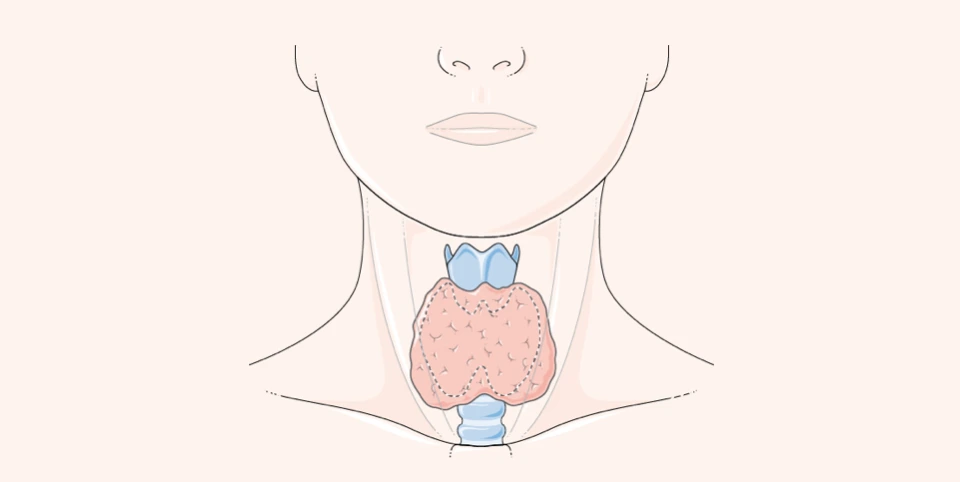
An increased level of thyroid hormones leads to an increase in body's energy consumption and elevation of basal metabolic rate. This leads to fatigue and weight loss.
However, in some patients dysregulated thyroid levels can lead to cardiac abnormalities such as arrhythmias, heart failure and even cardiomyopathy. These are related to the direct action of thyroid hormones on the myocardium.
Thyrotoxicosis
Refers to an inappropriately high level of circulating thyroid hormones (T3, T4) above normal. It can result from:
- Excessive production of endogenous thyroid hormone by the thyroid gland, referred as hyperthyroidism, or,
- Excessive administration of exogenous thyroid hormone.
Thyroid Storm/Crisis
It presents as an acute life-threatening situation, with severe hypermetabolism, including high fever, and cardiovascular, neurologic and gastrointestinal dysfunction.
- Occurs in case of untreated or incompletely treated thyrotoxicosis.
- Can be precipitated by some form of stress, intercurrent disease, infection, trauma, thyroid surgery, or radioactive iodine administration.
*Primary difference between thyroid storm & severe thyrotoxicosis: Presence of hyperpyrexia (the body's temperature may reach a lethal level of 105oF or higher, within 24-48 hrs, if left untreated).
Clinical Manifestations
Thyrotoxicosis
-
Nervousness, increased irritability and insomnia (first clinical signs to be noted).
-
Intolerance to heat and hyperhidrosis (marked increase in sweating).
-
Warm and moist skin (Anxiety: cold and clammy palms).
-
Overactivity, including quick, uncoordinated movements that range from mild to gross tremors.
-
Rapid speech.
-
Unexplained weight loss accompanied by an increased appetite.
-
Fatigue and palpitation.
-
Cardiovascular manifestations:
- Increase in BP (systolic more than diastolic).
- Widening of the pulse pressure.
- Sinus tachycardia (more during sleep).
- Widening of the pulse pressure.
- Sinus tachycardia (more common during sleep).
- Occasional paroxysmal atrial fibrillation and heart failure.
Thyrotoxicosis Associated with Graves' Disease
- Upper-lid retraction.
- Staring.
- Lid lag,
- Proptosis.
- Exophthalmos.
- Extraocular muscle palsies.
Thyroid Storm
-
Hyperpyrexia.
-
Excessive sweating.
-
Nausea, vomiting and abdominal pain.
-
Cardiovascular disturbances such as tachycardia and atrial fibrillation.
-
Heart failure with possible pulmonary edema.
-
CNS manifestations:
- Mild tremors
- Agitation and disorientation.
- Psychotic behaviour, stupor (partial unconsciousness) and eventual coma.
Diagnostic Clues
- Sweating.
- Heat intolerance.
- Tachycardia.
- Warm, thin, soft, moist skin.
- Exophthalmos.
- Tremor.
Management
- Terminate all dental treatment.
- Place the patient is a supine position with the legs elevated slightly.
- Assess circulation, establish a patent airway, and assess breathing.
- Call for medical assistance.
- Administer oxygen, as needed.
- Administer IV fluid : 5% solution of dextrose and water, lactated Ringers solution or normal solution.
- Shift to a hospital emergency for definitive management.
Definitive Management
- Antithyroid drugs eg. propylthiouracil, in large doses.
- Propranolol to block the adrenergic-mediated effects of thyroid hormones.
- Glucocorticoids (large dose) to prevent acute adrenal insufficiency.
Other Measures
- Oxygen.
- Cold packs.
- Sedation.
- Careful monitoring of hydration and electrolyte balance.
Dental Therapy Considerations
- Dental treatment should be postponed until the patient's underlying metabolic disturbance is corrected.
- Atropine use should be avoided.
- Hyperthyroid patients may seem apprehensive, which might suggest the need for sedation during dental treatment. However, sedation may prove futile as the anxiety is not psychological but hormonally induced.
Epinephrine Use
- Epinephrine and other vasopressors should be used with caution in clinically hyperthyroid patients.
- Use of racemic epinephrine is absolutely contraindicated in a clinically hyperthyroid patient.
- Patients who are clinically hyperthyroid are unusually sensitive (hyper-responders) to catecholamines such as epinephrine, and responds with hypertensive episodes, tachycardia or significant dysrhythmias.
Precautions while using local anesthetics with vasoconstrictors
- Use the least-concentrated effective solution of epinephrine (1:200,000 is preferred to 1:100,000, which is preferred to 1:50,000).
- Injecting the smallest effective volume of anaesthetic/vasopressor.
- Aspiration prior to every injection.
References
- Medical Emergencies in the Dental Office (7th edition), Stanley F. Malamed, Daniel L Orr II, Mosby Elsevier. https://amzn.to/3UlLow2
- Contemporary Oral and Maxillofacial Surgery (6th edition), James R Hupp, Edward Ellis III, Myron R Tucker, Mosby Elsevier. https://amzn.to/4beSQQp
- Image Credit: Google Gemini.
*This article is an excerpt from the above mentioned books and Medical Sutras does not make any ownership or affiliation claims.