
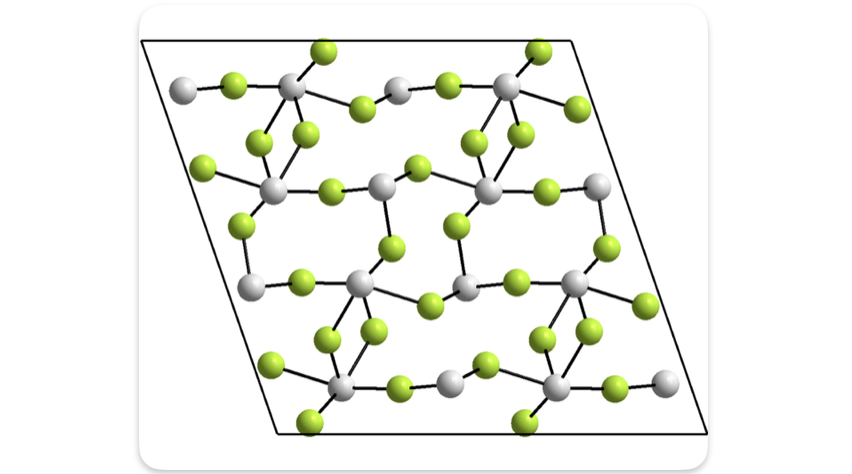
Stannous fluoride (SnF2) is available in powder form and is recommended in 8 percent concentration.
Preparation: The stannous fluoride preparation was developed by Muhler.
- It can be prepared by dissolving 8gm of powder in 100 ml of distilled water (or 0.8gm in 10ml).
- The pH of the prepared solution is about 2.4-2.8.
- The solution should be freshly prepared as it is not stable, and the leftover solution should be discarded after application.
Mechanism of Action
Stannous fluoride reacts with hydroxyapatite and forms Stannous tri-fluorophosphate(Sn3F3PO4) by reaction of Tin (cations) with the enamel. This occurs in addition to the reaction of F-(anions) with enamel components and formation of calcium fluoride.
Low concentration:
Ca5[PO4]3OH + 2SnF2 --> 2CaF2 + Sn2[OH]PO4 + Ca3[PO4]2
High concentration:
Ca5[PO4]3OH + 16SnF2 --> CaF2 + 2Sn3F3PO4 + Sn2[OH]PO4 + 4CaF2[SnF3]2
- Tin tri-fluorophosphate (Sn3F3PO4) is the main end product and responsible for making the tooth structure more stable and less susceptible to acid dissolution.
- Tin hydroxyphosphate (Sn2[OH]PO4) gets dissolved in the oral fluids and is responsible for the metallic taste.
- Calcium fluoride so formed further reacts with hydroxyapatite and forms fluorhydroxyapatite.
Application
Schedule: A six monthly interval treatment schedule is advised.
Method:
- The teeth should be cleaned, and isolated with cotton rolls.
- It is applied quadrant wise.
- Each quadrant is dried with compressed air and freshly prepared solution is applied using cotton applicator.
- Care should be taken so that all teeth surfaces are treated.
- The teeth surfaces should be kept moist for 4 minutes by continuously re-applying with the cotton applicator.
- Patient is allowed to expectorate after cotton rolls are removed and instructed not to eat, drink or rinse for 30 minutes.
Advantages
- Expected caries reduction is 25-35%.
- Recommended frequency (6-12 months) is less than as in case of sodium fluoride.
- Highly effective topical fluoride preparation.
- Very useful for spot application in case of Early childhood caries and rampant caries.
- Stable stannous fluoride gel is also available and recommended for radiation caries among patients undergoing radiotherapy for head and neck.
Disadvantages
- Solution has to be freshly prepared each time before use (highly unstable).
- Bitter metallic (astringent) taste, not palatable to children.
- Can cause gingival irritation (blanching and burning sensation).
- Causes brown pigmentation of teeth particularly in hypocalcified areas and around margins or restorations.
- Not economical.
References
- C. M. Marya - A Textbook of Public Health Dentistry, Jaypee Brothers Medical Publishers (P) Ltd (2011). https://amzn.to/3SHP36G
- S. S. Hiremath - Textbook of Public Health Dentistry, Elsevier India (2016). https://amzn.to/49mh2jw
- The image used is licensed under the Creative Commons Attribution-Share Alike 3.0 Unported, 2.5 Generic and 1.0 Generic license (Source: Wikimedia Commons).
*This article is an excerpt from the above mentioned books and Medical Sutras does not make any ownership and affiliation claims.