
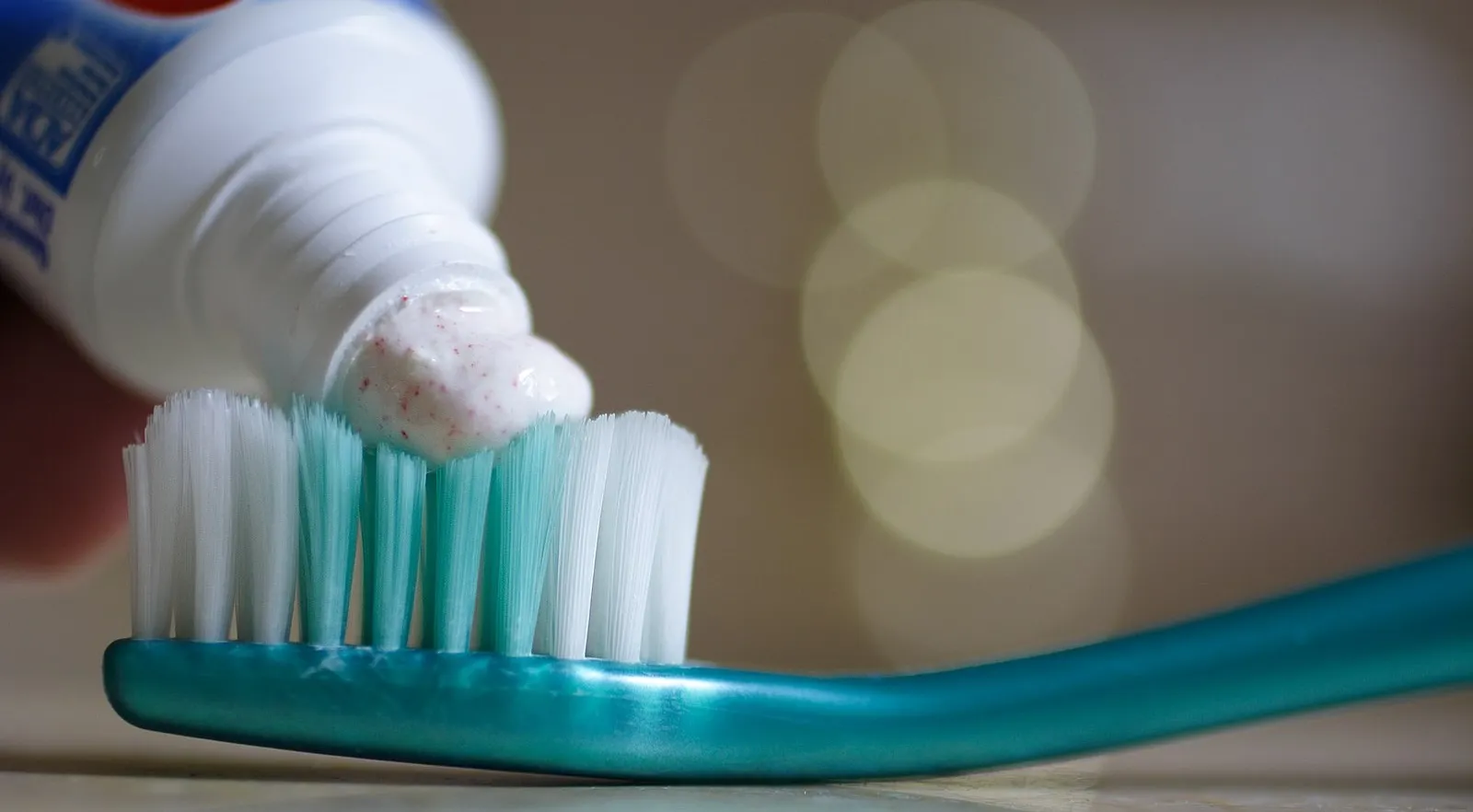
Self applied topical fluorides include fluoride dentifrices, mouthrinses, gels, tooth picks, floss and chewing gums. The requisites for self applied agents include:
- Safe and effective for preventing caries.
- Economical and suitable for use by large groups.
- Acceptable to participants.
- Easy to use to ensure compliance.
- Require few professional help.
- Can be supervised by non-dental personnel after short period of in-service training.
Fluoride Dentifrice
It is the most widely used method for topical application of fluoride.
Toothpaste formulations: A concentration of 0.1% F (1 mgF/g paste) can be achieved by addition of:
- Sodium monofluorophosphate (0.76%): Most widely used, as the monofluorophosphate (MFP) ion is compatible with a wide variety of toothpaste abrasives and it does not require an acid pH. MFP dentifrices have a neutral or slightly alkaline pH and do not stain enamel surfaces or margins of restorations.
- Sodium fluoride (0.2%).
- Stannous fluoride (0.4%): Lead to black/brown staining of tooth surface, esp. around margins of tooth colored restorations.
Recommended Schedule
- Below 4 yr: Fluoride toothpaste not recommended.
- 4-6 yr: Brushing once daily with fluoride toothpaste and two times without paste.
- 6-10 yr: Brushing twice daily with fluoride toothpaste and once without paste.
- Above 10 yr: Brushing three times daily with fluoride toothpaste.
Safety of Fluoride Dentrifices
- Certainly lethal dose (CLD) of fluoride is 32-64 mgF/kg and Safely tolerated dose is 1/4th of CLD i.e., 4-8 mgF/kg.
- Fluoride toothpaste generally contains 800-1,000 ppm of F- and the free available fluoride is about 500-600 ppm, i.e., 30 mgF in a tube of 50 gm.
- Most toothpaste contains 1000 ppm of fluoride and a 1 inch ribbon (1 gm) of dentifrice of an adult toothbrush contains approx. 1 mg fluoride.
- The average amount of toothpaste ingested during brushing varies from about 35% in children aged 2-4 years to only 3% in adults.
- Generally, the amount of fluoride in commonly available toothpaste size (max. 200 gm) is within the safely tolerated dose. However, these should be kept out of the reach of young children.
Fluoride Mouthrinse
The rationale behind fluoride mouth rinses is that the cariostatic effect of frequent application of low concentration fluoride is greater than that of less frequent application of high concentration topical fluoride.
Dosage
- Once daily (Low concentration and high frequency): 0.02% (225 pp F-) or 0.05% NaF.
- Once weekly/fortnightly (High concentration & low frequency): 0.2% (900 ppm F-) or 0.5% NaF.
Preparation
- Home use: 200 mg NaF tablet (10 mg NaF and rest lactose as fillers) in approx. 25 ml (5 teaspoons) fresh, clean water. This is sufficient for a daily mouth rinse for a family of about 4 members, providing approximately 0.04 percent NaF.
- School use: 2 gm NaF powder dissolved in 1L water (0.2% solution). This is suitable for weekly or fortnightly use in schools.
- Over the counter: Daily fluoride mouthrinses contains 200-220 ppm F (0.05% NaF), while, weekly fluoride mouthrinses contain 0.2% NaF (900 ppm F). Weekly mouthrinses should be used under adult supervision.
Indications
- Caries susceptible children above 6 years age (have good reflex control of swallowing).
- Patients wearing orthodontic appliances.
- Patients with dentinal hypersensitivity, tooth wear and root caries.
Contraindication: Children under 6 years of age, and those not capable of rinsing appropriately.
Points to Note
- In children under 6 years age, only a very small amount (< 5 mm) of fluoridated toothpaste should be used and brushing should be supervised to prevent excessive ingestion.
- Fluoride mouthrinses should be used at a time when toothpaste is not used, and it should be taken as a substitute for brushing.
- Fluoride varnish is the choice of topical agent in high-risk patients with poor compliance to home regimes (self-applied topical fluoride).
References
- C. M. Marya - A Textbook of Public Health Dentistry, Jaypee Brothers Medical Publishers (P) Ltd (2011). https://amzn.to/3SHP36G
- S. S. Hiremath - Textbook of Public Health Dentistry, Elsevier India (2016). https://amzn.to/49mh2jw
- The image used is licensed under the Creative Commons Attribution-Share Alike 3.0 Unported license. Source: Wikimedia Commons. Author: Thegreenj (Own work).
*This article is an excerpt from the above mentioned books and Medical Sutras does not make any ownership and affiliation claims.