
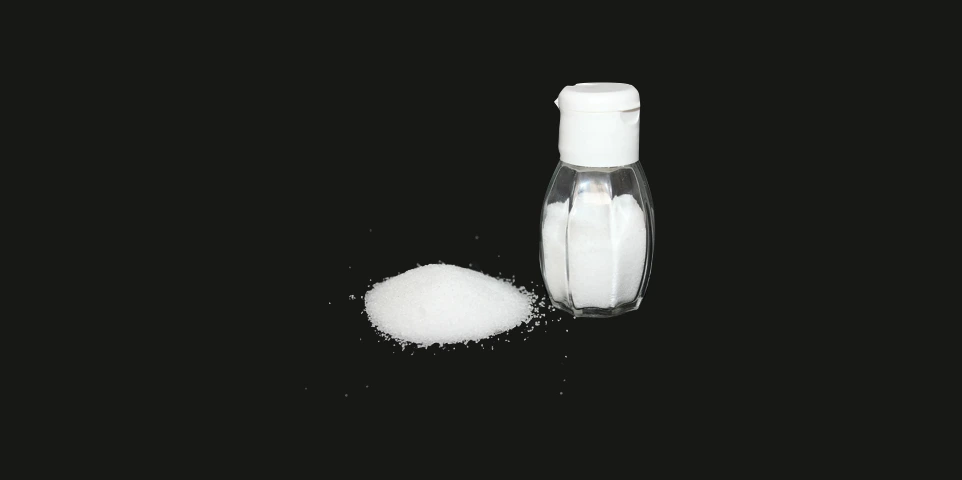
Salt fluoridation is the controlled addition of fluoride, usually as sodium or potassium fluoride, during the manufacture of salt for consumption.
-
Recommended concentration : 250 mg of fluoride per kg salt.
-
Methods of salt fluoridation:
- Spraying concentrated solution of NaF or KF on salt on a conveyor belt, or
- Mixing premixed granules added to the salt.
History & Use
Fluoridated salt as a means of preventing caries was first used in 1955 in Switzerland by Wespi, a gynaecologist who started adding of fluoride to salt.
- The addition of fluoride to salt for human consumption was officially authorised in 1980-82.
- The Swiss studies began with salt fluoridated to 90 mgF/kg salt (or 90 ppm). It was later increased to the current standard 250 mgF/kg.
- The most appropriate concentration have been estimated from studies of 24 hours urinary fluoride excretion.
- Countries using salt fluoridation : Germany, Mexico, Colombia, Peru, Cuba, Hungary, Spain, France, Costa Rica, Jamaica, etc.
Advantages
- The caries preventive action of fluoridated salt is substantial, approaching that of fluoridated water. As a dietary vehicle for fluoride, domestic salt is the second best to water fluoridation.
- Caries reduction is about 40-50%.
- Low cost.
- Wide coverage.
- Requires little conscious action by the individual.
- Freedom of choice available for consumers as both fluoridated and non-fluoridated salt is available.
- It is safe as toxic levels of salt are reached long before that of contained fluoride.
- No supervised water works or water distribution system is necessary, making it a practical method for many countries.
- Minimum possibility of fluorosis as children use very little salt.
Disadvantages
- Community wide caries-preventive impact is clearly related to the extent of public acceptance.
- Needs to be accompanied by public education and promotion.
- Salt intake varies among individuals, hence, control on individual consumption is not as precise as with water fluoridation.
- There are international efforts to reduce sodium intake to help control hypertension.
- Consumption of fluoridated salt is lowest during early life when the need for fluoride is the maximum.
WHO criteria for use of salt fluoridation
- It should be used where water fluoridation is not possible.
- Where there are low levels of fluoride in water.
- Where there is not the political will to introduce water fluoridation.
- Where there is a centralised salt production system with strong technical support.
- Appropriate labelling of the salt packages is essential.
References
- C. M. Marya - A Textbook of Public Health Dentistry, Jaypee Brothers Medical Publishers (P) Ltd (2011). https://amzn.to/3SHP36G
- S. S. Hiremath - Textbook of Public Health Dentistry, Elsevier India (2016). https://amzn.to/49mh2jw
- Marthaler TM. Salt fluoridation and oral health. Acta Med Acad. 2013 Nov;42(2):140-55. doi: 10.5644/ama2006-124.82. PMID: 24308394.
- The image used is licensed under Creative Commons Attribution-Share Alike 4.0 International license. (Source : Wikimedia Commons, Author : Poyraz 72).
*This article is an excerpt from the above mentioned books and Medical Sutras does not make any ownership and affiliation claims.