
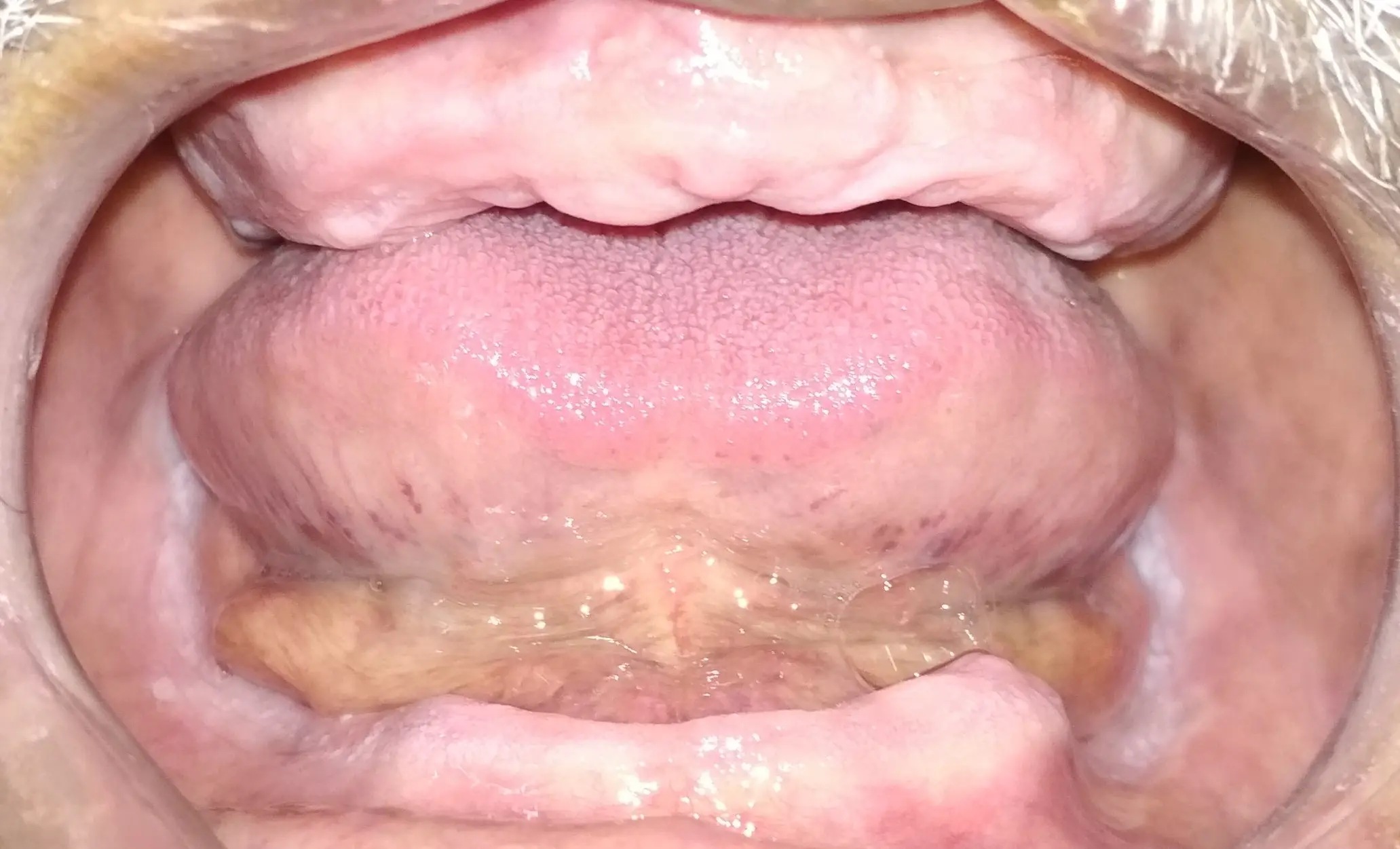
Classification of residual ridge morphology can be used as diagnostic guide to reconcile morphological features with treatment choice and prognosis. McGarry et al published the following classification system in 2004.
Class I
Describes the stage of edentulism that is most apt to be successfully treated by conventional prosthodontic techniques with complete denture prosthesis.
It is defined by:
- Residual bone height 21 mm or greater measured at the least vertical height of the mandible.
- Class I maxillomandibular relationship.
Class II
Distinguishes itself with the noted continuation of the physical degradation of the denture-supporting structures and in addition is characterised by localised soft tissue factors and patient management/lifestyle considerations.
It is defined by:
- Residual bone height 16-20 mm measured at the least vertical height of the mandible.
- Class I maxillomandibular relationship.
- Residual ridge morphology that resists horizontal and vertical movement of the denture base.
Class III
Characterised by the need for surgical intervention (implant therapy or preprosthetic surgery) to allow for adequate prosthodontic function.
It is defined by:
- Residual bone height 11-15 mm measured at the least vertical height of the mandible.
- Class I, II and III maxillomandibular relationship.
- Residual ridge has minimum influence to resist horizontal or vertical movement of the denture base.
- Location of muscle attachments with moderate influence on denture-base stability and retention.
Class IV
Depicts the most debilitated edentulous condition. Surgical reconstruction is almost always indicated but cannot always be accomplished because of the patient's health, desires, past dental history and financial considerations.
It is defined by:
- Residual bone height of least vertical height of the mandible.
- Class I, II and III maxillomandibular relationships.
- Residual ridge offers no resistance to horizontal or vertical movement.
- Location of muscle attachments with significant influence on denture-base stability and retention.
References
- Prosthodontic Treatment for Edentulous Patients Complete Dentures and Implant-supported Prostheses (13th edition) , Zarb, Hobkirk, Eckert, Jacob, Mosby Elsevier.
- Data from McGarry TJ, Nimmo A, Skiba JF, et al: Classification system for complete edentulism. The American College of Prosthodontics, J Prosthodont 8(1):27-39, 1999.
*This article is an excerpt from the above mentioned source and Medical Sutras does not make any ownership and affiliation claims.