
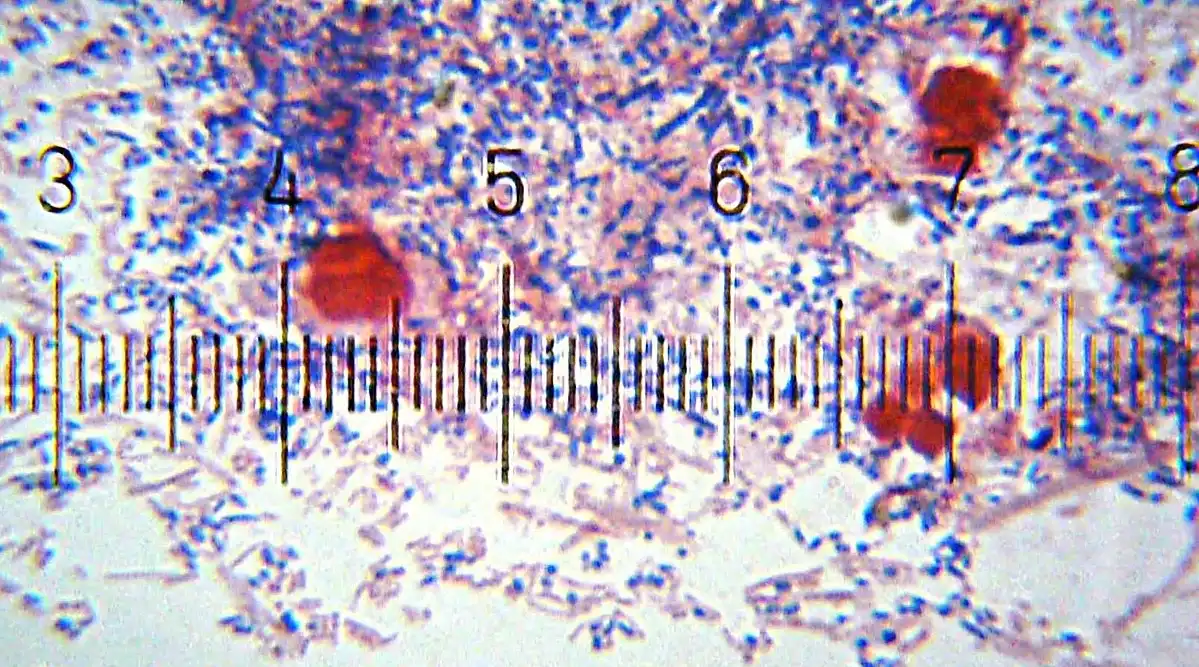
Several microbes are found to have significant role in the initiation and progression of dental caries,
- Pit and fissure caries : S. mutans, Lactobacillus, S. sanguis (uncertain).
- Smooth surface caries : S. mutans, S. salivarius (by chance).
- Root surface caries : A. viscosus, A. naeslundii, S. mutans, S. sanguis (by chance).
- Deep dentinal caries : Lactobacilli species, A. naeslundii, Other filamentous rods.
Oral Streptococci
The most important species found in the oral cavity include:
- S. mutans.
- S. sanguis.
- S. mitior.
- S. salivarius.
- S. milleri.
Streptococcus mutans
Strains of S. mutans can almost always be found in plaques over incipient lesions involving pits and fissures or smooth tooth surfaces, and have proved to be cariogenic in animal studies.
-
These are catalase negative, gram-positive cocci forming short to medium chains.
-
Most strains of S. mutans (unlike other oral streptococci), can be selectively cultured in mitis salivarius agar containing 20% sucrose and 0.2% units/ml of bacitracin.
-
These are homofermentative (produces 90% or more lactic acid) and more aciduric than other oral streptococci.
-
Cariogenic strains contain a lysogenic bacteriophage which has not been isolated from non-cariogenic strains.
-
Non-cariogenic strains are unable to adhere to glass and have decreased ability to form insoluble polysaccharides.
-
Does not colonize the oral cavity in infants prior to the eruption of teeth and disappears from the mouth following extraction of all teeth.
-
Not free living in nature and have been isolated only from humans and certain animals. Infants most likely become infected from their parents or other individuals with whom they have frequent contacts.
-
Divided into five genotypes, based on nucleic acid base content and hybridization:
- S. mutans
- S. rattus
- S. sobrinus
- S. cricetus
- S. ferus.
-
S. mutans and S. sobrinus are most commonly found in human plaque.
Metabolism of S. mutans
- The most important substrate for the involvement of S. mutans in the caries process is the disaccharide sucrose.
- Most of the sucrose metabolised is utilised for its energy requirements and results in the production of lactic acid.
- They polymerise the glucose and fructose moieties of sucrose to synthesise glucans and fructans. These extracellular polymers are considered to be the essential in the attachment of S. mutans to enamel and subsequent plaque formation.
- These insoluble polymers function as a resistant structural matrix and also act as a diffusion barrier affecting the transport of metabolites and salivary buffers into the plaque and diffusion of acid out of the plaque.
- The localisation of acids upon the tooth surface is more significant than the presence of acids in the oral cavity, and dental plaque fulfils this function.
Lactobacilli
These are gram-positive, non-spore forming rods that grow best under microaerophilic conditions, and are predominantly found in deep fissures and deep dentinal lesions (favors their retention).
-
These are isolated using a selective agar medium (Rogosa) which suppress the growth of most other organisms by its low pH.
-
They constitute 1% of the oral flora and includes many species:
- Homofermentative : L. casei, L. acidophilus.
- Heterofermentative : L. fermentum, L. brevis.
-
They are both acidogenic as well as aciduric and hence, can multiply in the low pH of plaque and carious lesions.
-
However, the role of lactobacilli as an etiologic agent in dental caries is questionable, since the amount of acid produced by them is insignificant in comparison to that produced by other acidogenic oral organisms.
-
Also, they are not detectable in plaques covering white spot lesions on smooth surfaces.
Oral Actinomyces
These are gram-positive, filamentous organisms, found in significant numbers in numbers in human dental plaque and have been isolated from decayed root surfaces of human teeth.
- Strict anaerobes : A. israelii, A. odontolyticus.
- Facultative anaerobes : A. naeslundii, A. viscosus.
A. viscosus
- Acidogenic bacteria, forms both intracellular polysaccharide stores and extracellular levans and heteropolysaccharides consisting of hexosamine and hexose.
- It is predominant in plaque overlying root lesions. However, its role in initiating root caries is difficult to assess because, it is also found in sound root surfaces.
Veillonella
Gram-negative cocci commonly found in plaque, may have possible anticariogenic effect.
- Veillonella lack key enzymes involved in glycolysis and the hexose monophosphate shunt, hence, do not utilise sugars as an energy source.
- They utilise lactic acid by converting it to propionic and other weak acids. Hence, the stronger lactic acid (pKa 3.08) is converted to a less dissociated acid (pKa 4.7).
- Veillonella strains increase in number in dental plaque after lactic acid producing organisms have first colonised.
References
- Shafer, Hine, Levy Shafer's Textbook of Oral Pathology (7th edition), Editors - R Rajendran, B Sivapathasundaram, Elsevier.
- The image used is licensed under Creative Commons Attribution-Share Alike 3.0 Unported license. (Author : Bob Blaylock, Source : Own work, Wikimedia Commons).
*This article is an excerpt from the above mentioned books and Medical Sutras does not make any ownership or affiliation claims.