
The medical emergencies in dental practice can be broadly grouped in the following categories:
- Hypersensitivity reactions.
- Chest discomfort.
- Respiratory difficulty.
- Altered consciousness.
Hypersensitivity Reactions
Allergic or hypersensitivity reactions may present as Type 1 to Type 4 reactions, of which, the following are important to dental practice:
Type 1 (Immediate hypersensitivity reaction)
- Generalised anaphylaxis.
- Severe and life-threatening.
Type 4 (Delayed hypersensitivity reactions)
- Skin reactions: Erythema, Urticaria, Pruritus.
- Bronchospasm (Lower respiratory tract reaction).
- Laryngeal edema (Upper respiratory tract reaction).
Chest Discomfort
It may present as squeezing, bursting, pressing, burning, choking or crushing sensation.
The common medical emergencies include:
Angina Pectoris
- Refers to spasmodic, cramp-like, choking sensation or suffocating pain.
Acute Myocardial Infarction
- A clinical syndrome characterised by severe and prolonged substernal pain caused by cardiac ischemia and damage to myocardial cells.
Respiratory Difficulty
Acute Asthmatic Episode
It is characterised by shortness of breath or wheezing. It occurs in patients with history of asthma and may present as:
- Reversible respiratory smooth muscle spasm, or,
- Irreversible airway inflammation with edema and mucus hypersecretion.
Hyperventilation
It refers to ventilation in excess of that required to maintain normal arterial oxygen and carbon dioxide tension.
- It is produced by an increase in the frequency or depth of respiration or both.
- The common causes include extreme anxiety, pain, metabolic acidosis, drug intoxication, hypercapnia, cirrhosis, organic CNS disorder.
Foreign Body Airway Obstruction
It occurs when the aspirated object enters into the tracheobronchial tree, resulting in:
- Partial airway obstruction, or,
- Complete airway obstruction.
Gastric Contents Aspiration
Aspiration of gastric contents into the lower respiratory tract can lead to serious respiratory difficulties due to the low pH and particulate matter.
- The low pH of gastric content can necrotise the pulmonary tissue, resulting in transudation of fluid into the pulmonary alveoli and loss of lung tissue.
- The particulate matter in gastric content can cause physical obstruction of the pulmonary airways.
Altered Consciousness
Syncope
There is transient loss of consciousness caused by reversible disturbances in cerebral function. It may occur due to:
- Inadequate cerebral circulation.
- Changes in the quality of blood perfusion to the brain.
- Alterations in the parts of central nervous system that regulate consciousness and equilibrium.
- Emotional disturbances.
Seizure
It is characterised by paroxysmal excessive neuronal brain activity and an abrupt onset of motor, sensory or psychic symptoms. The seizures may present as:
- Simple partial seizure.
- Complex partial seizure.
- Tonic clonic seizure.
- Absence seizure.
- Status epilepticus.
Acute Hypoglycemic Shock
It occurs when there is sudden fall in blood glucose levels below 50 mg/dl in adults and 40 mg/dl in children.
Non-diabetic hypoglycemia is related to the over-secretion of insulin by pancreatic beta cells, due to increased insulin requirements. This may occur in case of:
- Prolonged anaesthesia.
- When the patient is empty stomach or there is a delay in next meal.
- Anxiety.
Local Anesthetic Toxicity
It is seen when the action of local anesthetics extend to excitable membranes other than the peripheral nerves, such as those in the heart, brain or neuromuscular junction.
This occurs when the local anaesthetic exceeds the maximum recommended dosage, such as in case of:
- Accidental intravascular injection.
- Administration of a large dose.
- Rapid rate of injection.
Thyroid Dysfunction
It includes thyrotoxicosis and acute thyroid storm.
- Thyrotoxicosis/Hyperthyroidism may result from excessive production of endogenous thyroid hormone by the thyroid glands or excessive administration of exogenous thyroid hormone.
- Acute thyroid storm or crisis occurs in case of untreated or incompletely treated thyrotoxicosis, and, presents as an acute life-threatening situation, with severe hypermetabolism including high fever and dysfunction of cardiovascular, neurologic and gastrointestinal systems.
Acute Adrenal Insufficiency
It is a potentially life threatening condition, that can occur in patient undergoing stressful dental treatment and having little-to-no adrenal function.
The adrenal function may be compromised due to:
- Primary adrenal insufficiency, or,
- Secondary adrenal insufficiency.
References
- Contemporary Oral and Maxillofacial Surgery, 6 edition, James R. Hupp, Myron R. Tucker, Edward Ellis III, Mosby.
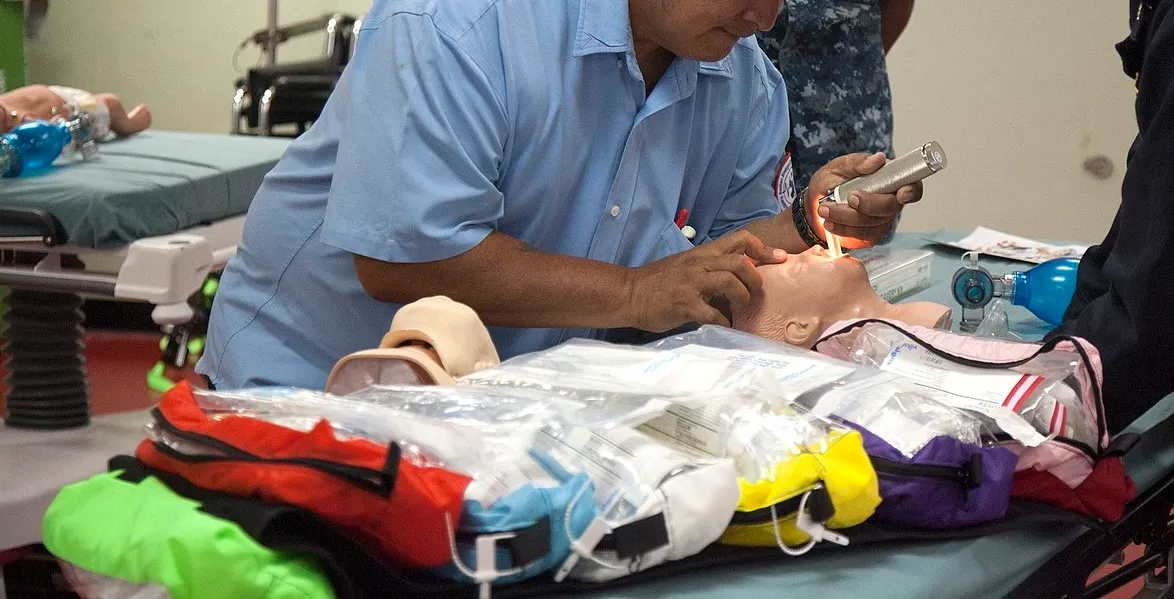
- The image used is in public domain released by the United States Army with the ID 150416-A-OM702-001 (Source: https://www.dvidshub.net/image/1880421/continuing-promise-2015).
*This article is an excerpt from the above mentioned book and Medical Sutras does not make any ownership or affiliation claims.