
Malabsorption syndrome can result from a wide range of diseases that affect the absorptive function of the gastrointestinal tract.
These can be classified based on their effects on one or more phases of enteral nutrient processing (digestion and absorption). These phases include:
- Luminal digestion.
- Mucosal digestion and absorption.
- Postmucosal absorption.
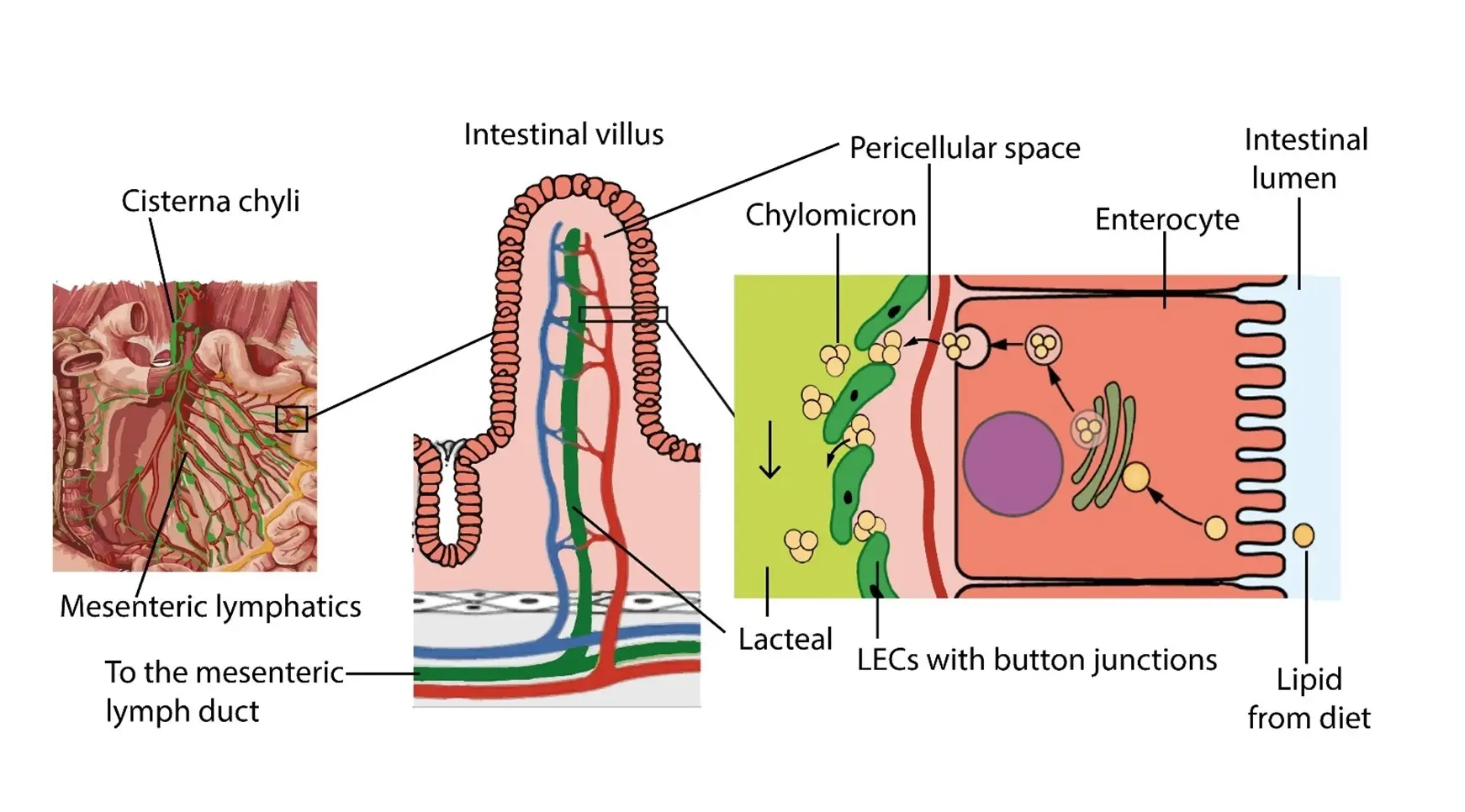
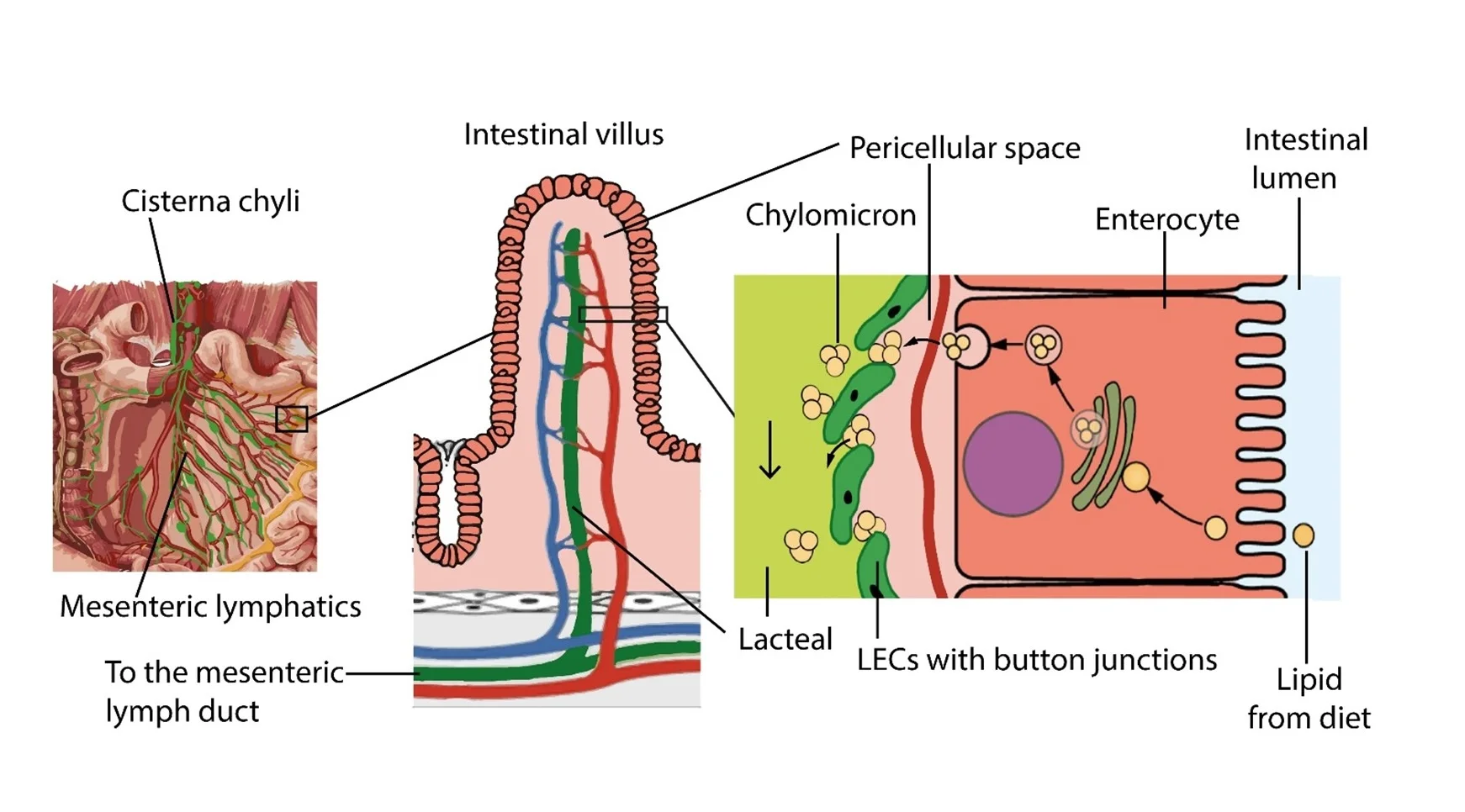 Lipid absorption & lymphatic system
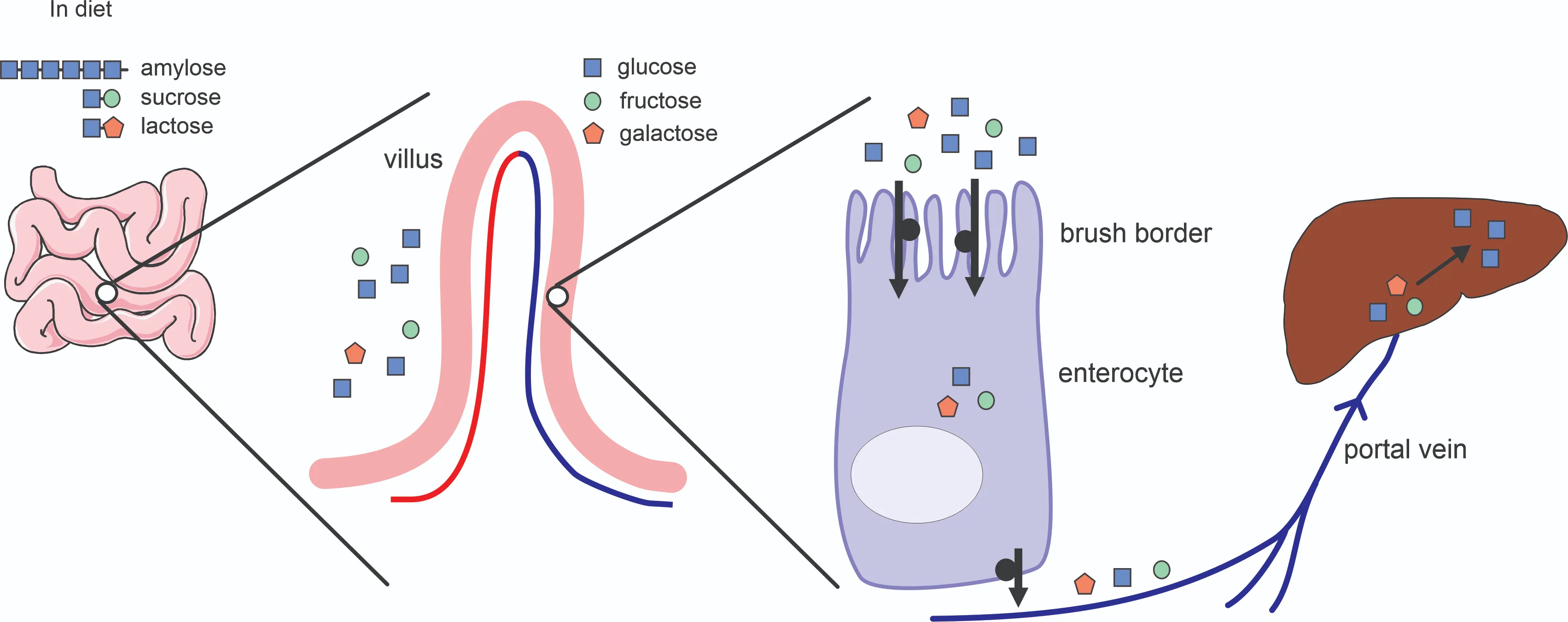 Intestinal carbohydrate absorption and digestion
Luminal Digestion
Begins in the mouth and proceed throughout the GI tract.
- Mouth: Mastication and salivary amylase and lipase.
- Stomach: Mechanical trituration and via gastric acid, gastric lipase and pepsin secretion.
- Small intestine: Pancreatic enzymes (amylase, lipases, carboxypeptidase, trypsin and other endopeptidases) contributes to carbohydrate, lipid and protein digestion. Bile salts (secreted by the liver and reabsorbed in the ileum via enterohepatic circulation) helps in efficient lipid absorption.
Disorders affecting luminal phase of digestion
- Disorders of gastric motility: Gastric resection.
- Disorders of Intestinal Motility: Hyperthyroidism, Long-standing diabetes mellitus, connective tissue disorders incl. scleroderma.
- Pancreatic insufficiency with reduced pancreatic enzyme secretion: Chronic pancreatitis.
- Luminal bile salt deficiency: Hepatobiliary diseases (primary sclerosing cholangitis or primary biliary cirrhosis), ileal resection (>100 cm result in loss of bile acids that exceed liver synthetic capacity), Crohn’s disease, and small-bowel bacterial overgrowth.
Mucosal Digestion & Absorption
Occurs in the small intestine, mediated by enterocytic brush border enzymes.
- Enterokinase: Required for conversion of pancreatic trypsinogen to trypsin (further activates trypsinogen and other pancreatic protease proenzymes).
- Disaccharidases: Disaccharides to monosaccharides.
- Dipeptidases: Dipeptides to amino acids.
- Other hydrolases.
Disorders of transporters & enzyme deficiency
- Lactose intolerance due to lactase deficiency.
- Glucose & galactose malabsorption (mutation in brush border protein, SLC5A1).
- Abetalipoproteinemia (mutation of microsomal triglyceride transfer protein).
Disorders involving multiple nutrients malabsorption
- Celiac disease.
- Whipple's disease.
- Tropical sprue.
- Short-bowel syndrome.
Postmucosal Absorption
Long-chain fatty acids are re-esterified to triglycerides in enterocytes, packaged into chylomicrons with apolipoproteins on the surface, and are subsequently secreted into the extracellular space.
These are then transported into lymphatics or portal circulation for use by other cells throughout the body. (These nutrients are excluded from capillaries, because of their size.)
Diseases affecting postmucosal absorption
- Primary disorders of the intestinal lymphatics: Intestinal lymphangiectasia (congenital or acquired).
- Secondary intestinal lymphatic damage or blockage: Retroperitoneal fibrosis, Fibrosing mesenteritis, and Lymphoma.
- Circulatory causes of impaired nutrient delivery from the intestine: Fontan physiology, Congestive heart failure, and Constrictive pericarditis.
The end result of damage to lymphatic channels is malabsorption and diarrhea with concomitant protein-losing enteropathy.
References
-
Harrison's Principles of Internal Medicine (21st edition), Joseph Loscalzo & Anthony S. Fauci & Dennis L. Kasper & Stephen Hauser & Dan Longo & J. Larry Jameson, The McGraw-Hill Companies.
-
Image source:
- Lymphatic system and lipid absorption: This file is licensed under the Creative Commons Attribution-Share Alike 4.0 International license. Source: Wikimedia Commons. Author: SGUL lymres.
- Intestinal carbohydrate digestion and absorption: This file is licensed under the Creative Commons Attribution-Share Alike 4.0 International license. Source: Wikimedia Commons. Author: Sander kersten.
*This article is an excerpt from the above mentioned book and Medical Sutras does not make any ownership or affiliation claims.