
Inflammation is a protective response of vascularised tissues to infection and tissue damage which brings host defense cells and molecules from circulation to the injury site, to eliminate the offending agents.
Significance
- Serves to rid the host of both the initial cause of cell injury such as microbes, toxin, and the consequences of such injury i.e., necrotic cells and tissues.
- Without inflammation, infections would go unchecked, wounds would never heal, and injured tissues might remain permanent festering sores.
Causes
The stimuli causing inflammation include infections, tissue necrosis, foreign bodies and immune reactions.
Infections & Microbial Toxins
- Can be bacterial, viral, fungal, or parasitic infection.
- Different pathogens elicit distinct inflammatory responses, and the morphologic pattern can help in identification of etiology.
- Response can vary from mild acute inflammation with little or no lasting damage, to severe and fatal systemic reactions, to chronic reactions.
Tissue Necrosis
- Inflammation is triggered by several molecules released from the necrotic cells.
- Inflammatory response is regardless of the cause of cell death, which may include ischemia, trauma, and physical and chemical injury.
Foreign Bodies (Splinters, dirt, sutures)
- Can elicit inflammation by themselves, or due to traumatic injury or microbes they carry.
Immune Reactions (Hypersensitivity reactions)
- Normally protective immune system can damage individual's own tissue.
- Includes autoimmune diseases (immune response may be directed against self antigens), and allergies (inappropriate reactions against environmental substances).
Mechanism/Steps
The inflammatory reaction can be divided into five steps:
- Recognition of injurious agent.
- Recruitment of leukocytes.
- Removal of the agent.
- Regulation/Control of the response.
- Resolution/Repair.
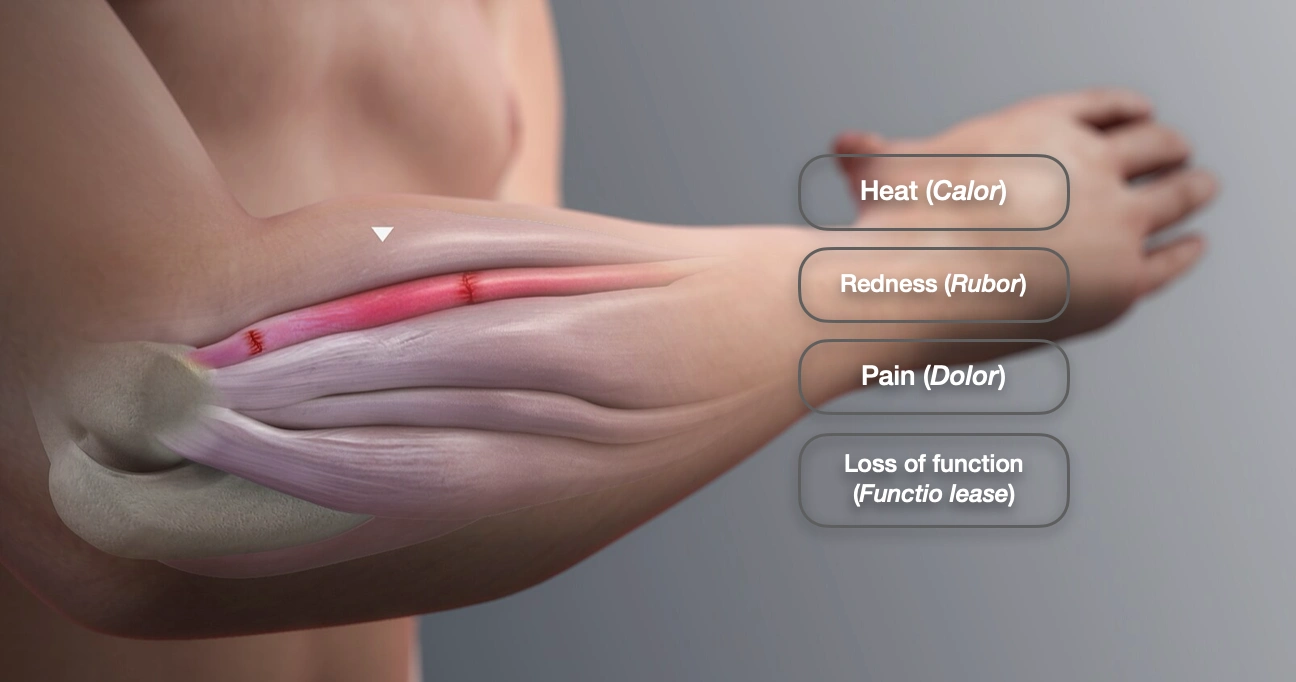
Cardinal Signs
These refers to the external manifestations of inflammation.
- Heat (calor).
- Redness (rubor).
- Pain (dolor).
- Loss of function (functio laesa).
Types
| **Acute Inflammation** | **Chronic Inflammation** |
|---|---|
| Initial, rapid response to infection and tissue damage. | Protracted response, May follow acute inflammation or arise de novo. |
| Develops within minutes or hours. | Onset is slow (days). |
| Short duration, lasting for several hours or a few days. | Longer duration. |
| Cellular infiltrate mainly neutrophils. | Lymphocytes and macrophages. |
| Tissue injury usually mild and self-limited. | Associated with more tissue destruction. |
| Local and systemics signs prominent. | Less local and systemic signs. |
References
- Robbins Basic Pathology, 10th edition, Vinay Kumar, Abul K. Abbas, Jon C. Aster, Elsevier.
- The image used in the cover photo is licensed under the Creative Commons Attribution 4.0 International license. Source: http://www.scientificanimations.com/wiki-images/ Author: www.scientificanimations.com.
*This article is an excerpt from the above mentioned book and Medical Sutras does not make any ownership or affiliation claims.