
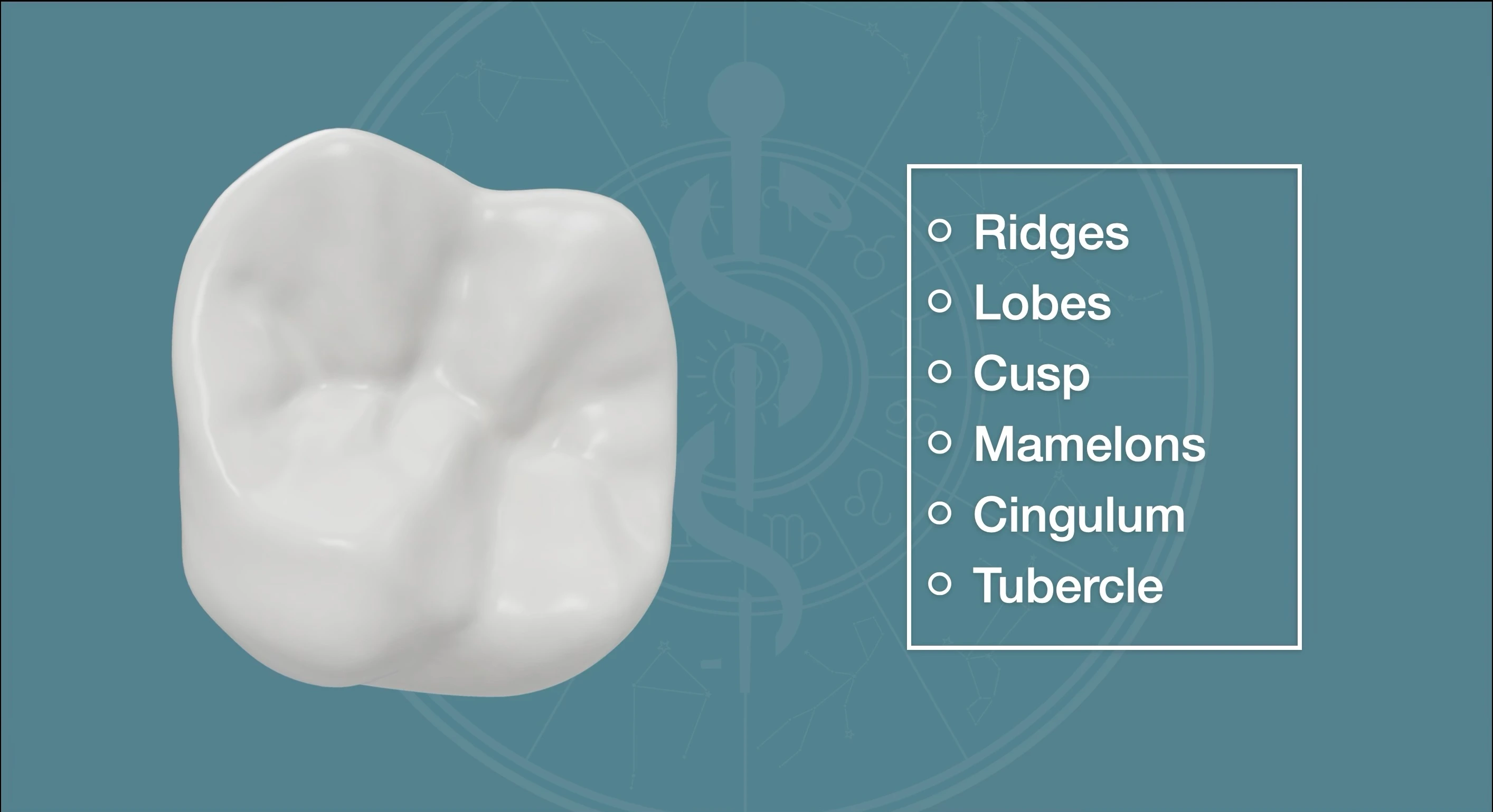
An elevation on tooth surface refers to any anatomic feature that protrudes or rises above the surrounding tooth structure. It includes:
- Ridges
- Lobes
- Cusp
- Mamelons
- Cingulum
- Tubercle
Ridges
It refers to a linear elevation on the surface of a tooth, and is named according to its location.
Some of the common ridges found on tooth surface are:
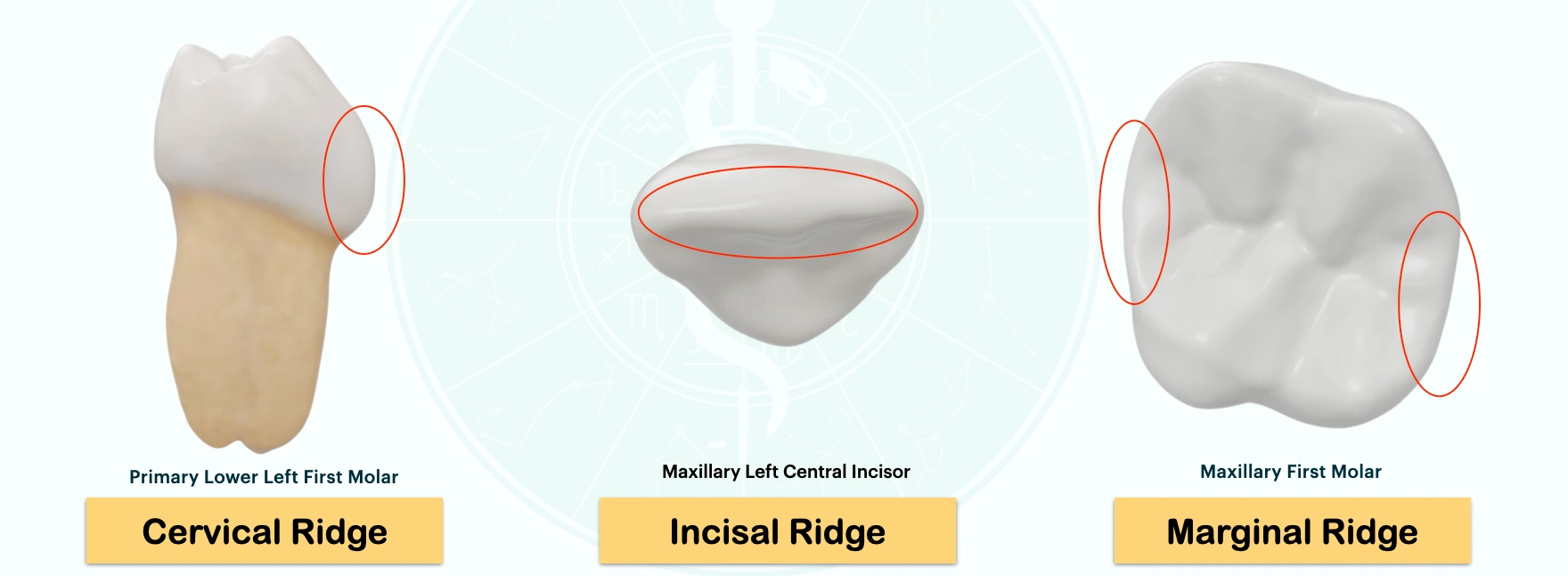
Buccal/Cervical Ridge
- Present on the cervical portion of buccal surface of primary teeth.
Incisal Ridge
- Present on the incisal edge of incisors and canines.
Marginal Ridges
- Include rounded borders of the enamel that form the mesial and distal margins of occlusal surfaces of premolars and molars.
- In case of anterior teeth (incisors and canines), they form mesial and distal margins of the lingual surface.
- These are named as Mesial Marginal Ridge (present mesially) and Distal Marginal Ridge (towards the distal side).
Triangular Ridges
- These descend from the cusp tip of premolars and molars toward the central part of the occlusal surfaces.
- These are called triangular because the slopes of each side of the ridge resemble two sides of a triangle.
- They are named after the cusps to which they belong, e.g., the lingual/triangular ridge of the buccal cusp of the upper first premolar, or triangular ridge of mesiobuccal cusp of maxillary firs molar.
Transverse Ridge
- It is formed by the union of two triangular ridges crossing transversely the surface of a posterior tooth.
- For example, in upper premolar, the lingual triangular ridge of buccal cusp and buccal triangular of lingual cusp forms the transverse ridge.
Oblique Ridge
- It is formed by the union of triangular ridge of the distobuccal cusp and distal cusp ridge of the mesiolingual cusp of maxillary molars.
- The ridge crosses the occlusal surface of maxillary molars in an oblique direction, hence, named as oblique ridge.
Lobes
Lobes refer to the primary sections of formation in the development of crown.
These are basically primary growth centres that represent distinct areas of enamel formation, that eventually fuse together to form the crown i.e., crown does not develop as a single entity, it is formed from the fusion of different lobes.
- All anterior teeth develop from four lobes.
- All premolars develop from 4 lobes, except lower second premolar that often develop from five lobes.
- Maxillary and mandibular first molars develop from five lobes, while second and third molars generally develop from four lobes.
*As the tooth erupts, lobes manifest as cusps, mamelons and cingulum.
Cusps
Cusp refers to the elevation or mound on the crown, that makes up a divisional part of the occlusal surface. These are present in the canines and posterior teeth.
- Canines have a single cusp, hence, they are often referred to as cuspids.
- Premolars have two cusps, hence, referred as bicuspids. However, lower second premolar is an exception, that can have three cusps (1 buccal and 2 lingual).
- First molars have five cusps, while, second and third molars generally have four cusps.
Mamelons
These are small, rounded protuberances found on the incisal ridges of newly erupted permanent incisor teeth.
- They are three in number and represent the mesial, labial and distal lobes on incisor teeth.
- As the teeth are used for mastication, the mamelons wear off and disappear.
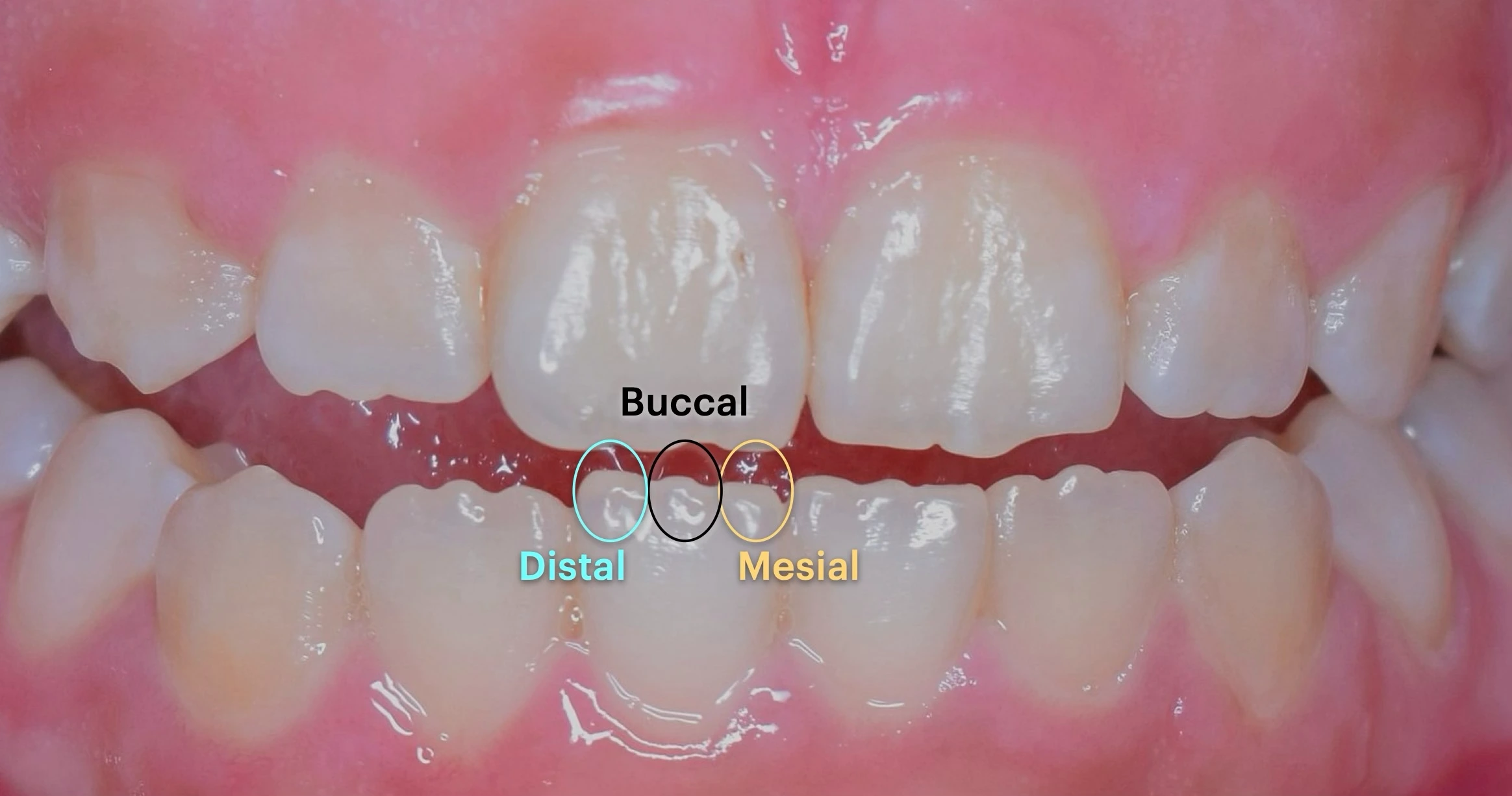 Image: Mamelons in the anterior teeth of a 14 year old patient with an open bite. Source: Wikimedia Commons. Author: Shaimaa Abdellatif

Cingulum
It is seen as a mound on the cervical third of lingual surface of anterior teeth. It develops from the lingual lobe and makes up the bulk of the cervical third of lingual surface.
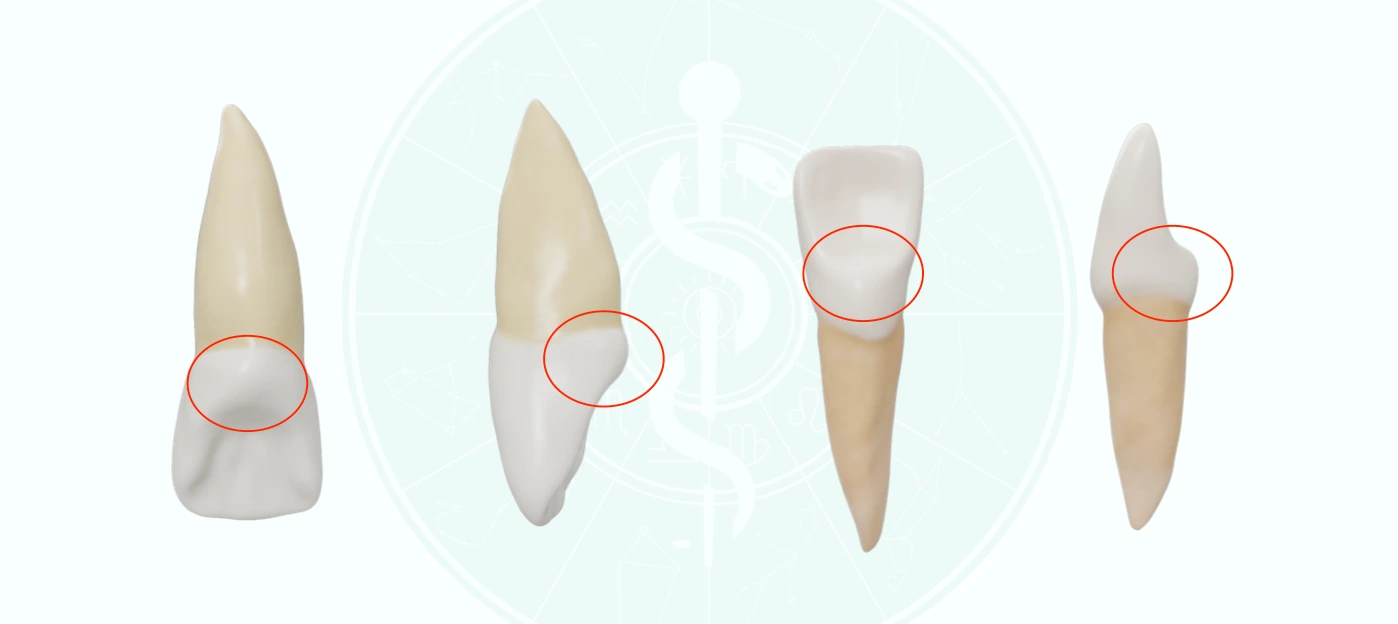 Image: Cingulum in upper and lower central incisors
Tubercle
These are small elevations found on some portions of crown, that are produced by extra formation of enamel.
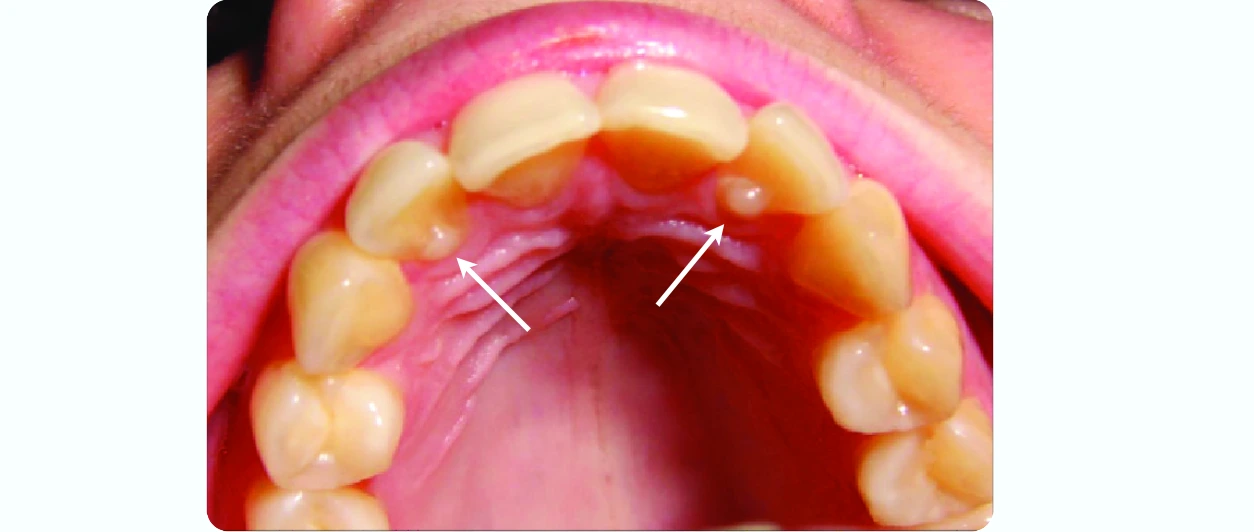 Image: Tubercle
References
- Wheeler's Dental Anatomy, Physiology and Occlusion(2019), Stanley J. Nelson DDS MS, Elsevier.
*This article is excerpt from the above mentioned book and Medical Sutras does not make any ownership and affiliation claims.