
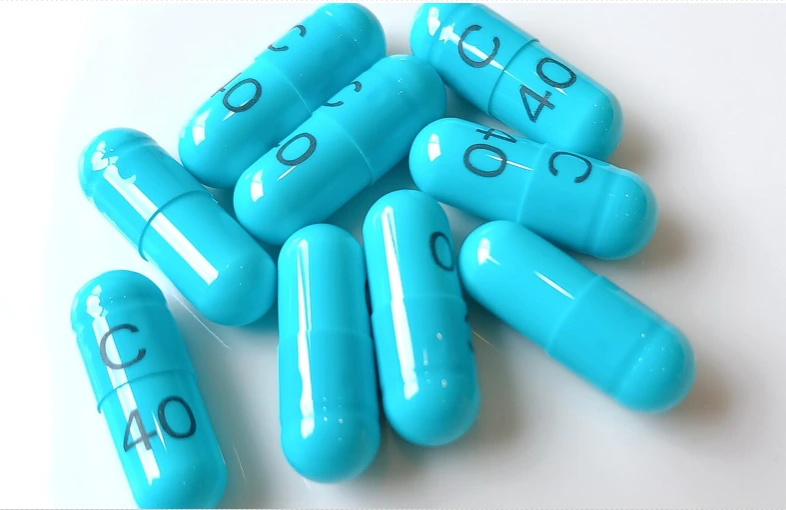
Clindamycin is a chlorine-substituted derivative of Lincomycin, an antibiotic that is elaborated by Streptomyces lincolnensis (chlorinated lincosamide antibiotic).
The spectrum of action include:
- Inhibits most gram-positive cocci, including 90% or more of streptococci sp. (incl. some macrolide-resistant) and penicillinase producing Staphylococcus (but not MRSA and coagulase-negative staphylococci).
- Highly active against a variety of anaerobes, especially Bact. fragilis, but reported resistance rates appear to be increasing particularly in gram-negative anaerobes.
- Inhibits C. diphtheriae, Nocardia, Actinomyces, Toxoplasma.
- Resistant organisms : Enterococci, gram-negative aerobic organisms and M. pneumoniae.
Mechanism of action
Similar to erythromycin, it binds to the 50S subunit of bacterial ribosomes and suppress protein synthesis.
- It inhibits protein synthesis by interfering with the formation of initiation complexes and with aminoacyl translocation reactions.
- Although, not structurally related, clindamycin, erythromycin and chloramphenicol act at the ribosomal sites in close proximity and ribosome binding by one may inhibit the interaction of others, result in cross-resistance.
Resistance to clindamycin : Can occur due to:
- Mutation of the ribosomal receptor site.
- Modification of the receptor by a constitutively expressed methylase.
- Enzymatic inactivation of clindamycin.
- Gram-negative aerobic species are inherently resistant because of poor permeability of the outer membrane.
Pharmacokinetics
Absorption : Oral absorption is good. It is nearly completely absorbed following oral administration and food does not affect absorption significantly.
Distribution
- Widely distributed in most tissues, including bone, and it readily crosses the placenta.
- It penetrates into most skeletal and soft tissues, but not in brain and CSF. However, concentrations sufficient to treat cerebral toxoplasmosis are achieved in CSF.
- It penetrates well into abscesses and is actively taken up and concentrated by phagocytic cells.
- Accumulates in neutrophils (polymorphonuclear leukocytes) and alveolar macrophages.
- The drug is about 90% protein-bound, with half life of about 3 hrs in adults (increases to 6 hours in patients with anuria).
Metabolism
- Occur in the liver, where it is inactivated to N-de-methylclindamycin and clindamycin sulfoxide.
- Both active drug and metabolites are excreted in the urine and bile.
- Accumulation can occur in patients with severe hepatic failure and dosage adjustments may be required.
Excretion
- Only 10% is excreted unaltered in the urine, small quantities are found in feces.
- No dosage adjustment required for renal failure.
Adverse effects
The major problem is diarrhoea (incidence : 2-20%) and pseudomembranous colitis.
- Pseudomembranous enterocolitis occurs due to Clostridium difficile superinfection (toxin) and presents with abdominal pain, fever, and bloody diarrhoea. It is potentially fatal and the drug should be immediately stopped and oral metronidazole (alternatively vancomycin) should be started for treatment.
- Rashes (~10%), urticaria, abdominal pain, nausea.
- Impaired liver function (with or without jaundice) and neutropenia sometimes occur.
- Thrombophlebitis of the injected vein can occur on IV administration.
Drug Interaction
- Clindamycin, erythromycin and chloramphenicol can exhibit mutual antagonism, probably because their ribosomal binding sites are proximal; binding of one hinders access to the other to its target site.
- Clindamycin slightly potentiates neuromuscular blockers administered concurrently.
Indications
The high incidence of diarrhoea and the occurrence of pseudomembranous colitis limit the use of clindamycin to infections where it is clearly superior to other agents.
-
Its use is restricted to anaerobic and mixed infections, especially those involving B. fragilis causing abdominal, pelvic and lung abscesses, anaerobic lung and pleural space infections, septic abortion, penetrating injuries. Because of potential toxicity,
- First line treatment : Clindamycin is generally combined with an aminoglycoside or a cephalosporin.
- Alternatives : Metronidazole and chloramphenicol for covering anaerobes.
-
Pneumocystis jiroveci pneumonia in AIDS patients : Clindamycin plus primaquine is an effective alternative to trimethoprim-sulfamethoxazole in moderate to moderately severe cases.
-
AIDS-related toxoplasmosis of the brain : Used in combination with pyrimethamine and leucovorin (to prevent bone marrow suppression).
-
Prophylaxis of endocarditis : Recommended in patients with specific valvular heart disease who are undergoing certain dental procedures and have significant penicillin allergies.
-
Effective topically or orally for acne vulgaris and bacterial vaginosis.
-
Toxic shock syndrome or necrotising fasciitis : Commonly used in conjunction with Penicillin G in cases caused by Group A Streptococcus. In this setting, its use is typically limited to the initial 48-72 hrs of treatment with the goal of inhibiting toxin production.
-
Skin and soft tissue infections in patients allergic to penicillins can be treated with clindamycin.
-
Multi-drug resistant falciparum malaria : Alternative to doxycycline for supplementing quinine or artesunate.
Dosage
Oral Dosage
-
Adults
- 150-300 mg every 6 hours.
- Severe infections : 300-600 mg every 6 hours.
-
Children
- 3-6 mg/kg QID. (Weighing less than 10 kg : Half teaspoon / 37.5 mg every 8 hours as a minimal dose).
- 8-12 mg/kg/day of clindamycin palmitate hydrochloride (severe infections 13-25 mg/kg/day) in 3 or 4 divided doses.
Parenteral Dosage
- 200-600 mg IV 8 hourly.
- Clindamycin phosphate is available for IM or IV use.
- Serious infections due to aerobic gram-positive cocci and more sensitive anaerobes : 600-1200 mg/day IV or IM divided in 3-4 equal doses for adults.
- Severe infections, particularly those proven or suspected to be caused by B. fragilis, Peptostreptococcus, or Clostridium species other than C. perfringens : 1.2-2.4 g/day is suggested.
Lincomycin
- Congener/forerunner of clindamycin.
- Has similar antibacterial and toxic properties.
- Less potent.
- Produces higher incidence of diarrhoea and colitis (deaths have occurred), hence, largely replaced by clindamycin.
- Dosage : 500 mg TDS-QID oral; 600 mg IM or IV infusion 6-12 hourly.
References
- Essentials of Medical Pharmacology 8th Edition (K.D. Tripathi)-Jaypee Brothers Medical Publishers (P) Ltd.
- Laurence L. Brunton - Goodman & Gilman's Manual of Pharmacology and Therapeutics-McGraw-Hill Medical (2008).
- Basic and Clinical Pharmacology, 15th Edition, Bertram G. Katzung, Todd W. Vanderah, McGraw Hill.
*This article is an excerpt from the above mentioned books and Medical Sutras does not make any ownership or affiliation claims.