
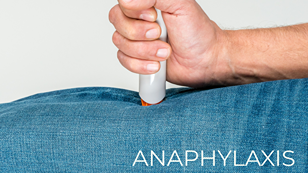
Clinical manifestations of allergic reactions range from mild, delayed reactions developing as long as 48 hours after exposure to the antigen, to immediate and life-threatening reactions developing within seconds.
Of the four basic types of hypersensitivity reactions, two are particularly relevant to the dental practice :
- Type I Immediate hypersensitivity or Anaphylactic reactions - can be severe and life-threatening.
- Type IV Delayed hypersensitivity reactions - seen clinically as contact dermatitis among large number of dental personnel.
Type I reactions can be subdivided as Generalised (systemic) anaphylaxis and Localised anaphylaxis (Skin reactions, Respiratory tract reactions, Cardiovascular reactions and Food allergy in the g.i. tract).
Delayed Onset Skin Reactions
-
Takes about 60 minutes or more to appear after antigenic exposure.
-
Clinical Manifestations
- Localised areas of erythema (rash, flushed skin), urticaria (hives), pruritus (itching) and angioedema.
-
Management
- Terminate all dental procedures and stop administration of all drugs presently in use.
- Administer anti-histamines (IV or IM) such as Diphenhydramine (50mg for patients weighing more than 30kg and 25mg for children, 15-30kg ) or Chlorpheniramine (10-20mg).
- Prescribe oral anti-histamines (Diphenhydramine 50mg or Chlorpheniramine 8 mg) for 2-3 days to be taken 4-6 hourly (q6h).
- Do not discharge the patient until the clinical signs and symptoms have resolved and do not allow the patient to leave the dental office alone or operate a motor vehicle.
Rapid Onset Skin Reactions
-
Develops in less than 60 minutes.
-
Clinical Manifestations
- Erythema (rash, flushed skin), urticaria (hives), pruritus (itching) and angioedema.
- Conjunctivitis and Rhinitis.
-
Management
- Terminate all dental procedures and stop administration of all drugs presently in use.
- Monitor and record vital signs (Pulse, blood pressure and respiratory rate) every 5 minutes.
- Epinephrine : Recommended when there is involvement of respiratory and cardiovascular systems. Dose : 0.3ml 1:1000 IM or SC (0.3mg for patients more than 30kg body weight, 0.15mg for 15-30kg, 0.075mg for less than 15kg). Epinephrine can be administered every 5-20 minutes as needed, to a maximum of three doses.
- Anti-histamines (Diphenhydramine or Chlorpheniramine) : Recommended when there is no cardiovascular and respiratory involvement and / or after resolution of the .cardiovascular or respiratory symptoms (IM, to provide more prolonged clinical activity).
- Consult patient's physician.
- Observe the patient for 1 hour.
- Prescribe oral anti-histamines (Diphenhydramine or Chlorpheniramine) for 2-3 days to be taken 4-6 hourly (q6h).
- Shift the patient to a hospital for further observation and additional treatment.
Lower Respiratory Tract Reactions (Bronchospasm)
-
There is constriction of bronchial smooth muscles and airway mucosal inflammation.
-
More common in asthmatics allergic to bisulfates and patients allergic to aspirin.
-
Clinical Manifestations
- Respiratory distress, wheezing, mild dyspnea and cyanosis.
- Flushing, perspiration, tachycardia and greatly increased anxiety.
- Use of accessory muscles of respiration.
-
Management
- Terminate all dental procedures and stop administration of all drugs presently in use.
- Activation of the emergency medical services and consult patient's physician.
- Place the patient in sitting / semi-erect position.
- Assessment of circulation, airway and breathing.
- Administer epinephrine : IM or SC (0.3ml of 1:1000 for patient weighing more than 30kg, 0.15mg for 15-30kg, 0.075mg for less than 15kg). It can be administered every 5-20 minutes as needed, to a maximum of three doses. Epinephrines does not relieve bronchospasm produced by leukotrienes, other inhalation bronchodilators, such as albuterol, may be used.
- Oxygen administration : 5-6L per minute by facemask or nasally.
- Administer anti-histamines (Diphenhydramine or Chlorpheniramine) : to minimize the likelihood of recurrence of bronchospasm, by occupying the histamine receptor site.
- Observe in office for at least 1 hour.
- Prescribe oral anti-histamines (diphenhydramine or chlorpheniramine) for 2-3 days to be taken 4-6 hourly (q6h).
- Shift the patient to a hospital for further observation and additional treatment.
Upper Respiratory Tract Reactions (Laryngeal edema)
-
This is a life threatening condition, with swelling of the vocal cords in the larynx.
-
Clinical Manifestations
- Patient is in respiratory distress and usually unable to speak.
- Produces high-pitched crowing sounds (stridor : partial obstruction) or no sound (complete obstruction).
- Little or no movement of air can be heard or felt through the mouth and nose, despite exaggerated chest movements.
- Cyanosis.
- Loss of consciousness due to hypoxia or anoxia.
-
Management
- Terminate all dental procedures and stop administration of all drugs presently in use.
- Activate the emergency medical services and consult patient's physician.
- Place the patient in upright / semi-erect position, if conscious. If the degree of laryngeal edema is significant, the level of consciousness will be altered and supine position with feet elevated is more appropriate.
- Assessment of circulation, airway and breathing. Extend the patient's neck via head tilt-chin lift, or jaw thrust-chin lift, followed by the insertion of a nasopharyngeal or oropharyngeal airway.
- Epinephrine : 0.3ml of 1:1000 epinephrine IM or SC for more than 30kg patients (0.15ml for 15-30kg, 0.075ml for less than 15kg patient), repeated every 5-20 minutes as necessary.
- Oxygen administration : 5-6L per minute by facemask or nasally.
- Monitor vital signs every 5 minutes.
- Administer anti-histamines (Diphenhydramine or Chlorpheniramine) and corticosteroid (Hydroscortisone 100mg) IM or IV, after clinical recovery i.e, airway improvement, normal or improved breath sounds, abscence of cyanosis and less exaggerated chest excursions.
- Cricothyrotomy : Indicated when total airway obstruction cannot be reopened at all or not in time by epinephrine and other drugs.
- Shift the patient to a hospital for further observation and additional treatment.
Generalised anaphylaxis
-
Clinical Manifestations
- Begins with patient complaining of malaise or feeling of impending doom.
- Skin manifestation : Flushing, urticaria and pruritus on the face and trunk.
- Nausea, vomiting, abdominal cramps and urinary incontinence.
- Dyspnea, wheezing and stridor.
- Cyanosis of nail beds and mucosa.
- Cardiovascular Manifestations : Initial tachycardia, followed by hypotension, cardiac dysrhythmias and cardiac arrest.
- Total airway obstruction and loss of consciousness.
-
Management
- Terminate all dental procedures and stop administration of all drugs presently in use.
- Activate the emergency medical services and consult patient's physician.
- Place the patient in supine position with feet elevated.
- Assessment of circulation, airway and breathing. Maintain the airway via head tilt-chin lift, or jaw thrust-chin lift and carry out BLS as needed.
- Administer Epinephrine : 0.3ml of 1:1000 epinephrine IM or SC for more than 30kg patients (0.15ml for 15-30kg, 0.075ml for less than 15kg patient), repeated every 5-20 minutes as necessary.
- Oxygen administration : 5-6L per minute by facemask or nasally.
- Monitor vital signs every 5 minutes.
- Administer anti-histamines (Diphenhydramine or Chlorpheniramine) and corticosteroid (Hydroscortisone 100mg) IM or IV, once there is improvement in patient's condition.
- Cricothyrotomy : Indicated when total airway obstruction cannot be reopened at all or not in time by epinephrine and other drugs.
- Shift the patient to a hospital for further observation and additional treatment.
Points to Note
- Overdose reactions are much more frequently encountered than allergic drug reactions (85% of adverse drug reactions result from the pharmacologic actions of a drug, while only 15% are immunologic reactions). Hence, it is important to fully evaluate an alleged history of allergy.
- Urticaria : Wheals (smooth, slightly elevated patches of skin) consisting of slightly elevated areas of epithelial tissue that are erythematous and indurated.
- Angioedema : Large areas of swollen tissue (measuring several centimetres in diameter), generally with little erythema or induration.
- Despite the potentially severe cardiovascular disturbances, the usual cause of death in anaphylaxis is laryngeal obstruction by vocal cord edema.
- Epinephrine inhaler should not be used when the patient has history of significant cardiovascular disease, including hypertension, angina pectoris, heart failure or status postmyocardial infarction.
- The preferred IM injection site for epinephrine is the vastus lateralis muscle, located on the anterior lateral aspect of the thigh.
- 1:1000 epinephrine concentrations are not to be used intravenously. 1ml should always be diluted with 9ml of diluent to produce 1:10,000 concentration, which is titrated IV at a rate of 1ml (0.1mg) per minute.
- The maximum dose for 1:10,000 epinephrine should not exceed 5.0ml.
- Epinephrine is relatively contraindicated in elderly patients and in cases of coronary artery disease, hypertension and angina pectoris. Also, it must be avoided in patients with life-threatening tachydysrhythmias. In these situations, anti-histamines or corticosteroid (whichever is appropriate) can be considered. However, in the presence of continued deterioration of the patient, epinephrine must be (re)administered.
- Corticosteroids inhibit edema and capillary dilation by stabilizing basement membranes, hence preventing relapse. They are of little immediate value because of their slow onset of action (apprx 6 hours), even when administered intravenously.
References
- Medical Emergencies in the Dental Practice (7th Edition), Stanley F. Malamed, Daniel L Orr II, Mosby Elsevier.
- Contemporary Oral and Maxillofacial Surgery (6th Edition), James R Hupp, Edward Ellis III, Myron R Tucker, Mosby Elsevier.
*This article is an excerpt from the above mentioned books and Medical Sutras does not make any ownership or affiliation claims.