

First described by Dr. Henry J. Heimlich in 1975, the subdiaphragmatic abdominal thrust/abdominal thrust (Heimlich maneuver) is the recommended primary technique for relief of foreign body airway obstruction (in individuals above 1 year age).
Mild airway obstruction (Good air exchange): Encourage the victim to spontaneously cough and breathe.
Severe airway obstruction: In conscious patients, the rescuer should follow the following steps before starting the maneuver:
- Ask the patient if he or she is choking: "Are you choking?"
- If the patient nods "yes", identify yourself as someone who can help.
- Ask for permission to attempt Heimlich's maneuver to relieve the obstruction. "Can I help you?"
*If the patient is unconscious, consent is implied.
Steps
The following steps are to be followed in a conscious patient:
- Kneel and stand behind the patient and wrap your arms around the victim's waist.
- Stabilise yourself so as not to fall backward when the procedure is carried out.
- Make a fist with one hand and place the thumb side of the fist against the patient's abdomen.
- The hand should rest in the midline, slightly above the umbilicus and well below the tip of the xiphoid process.
- Grab the fist with other hand and press the fist into patient's abdomen with a quick, forceful upward thrust.
- Repeat these forceful thrusts (inward and upward) until the foreign body is expelled or the patient loses consciousness.
- Each individual thrust should be forceful enough to dislodge the foreign object.
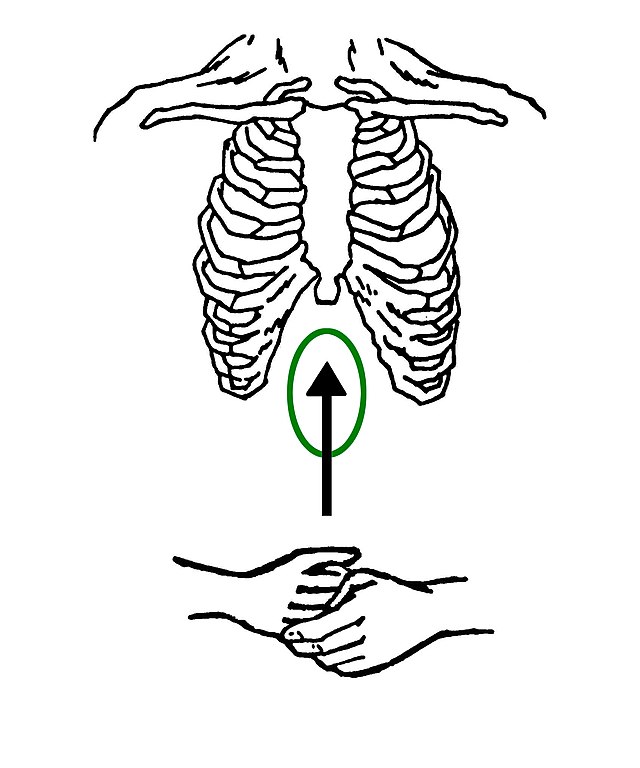
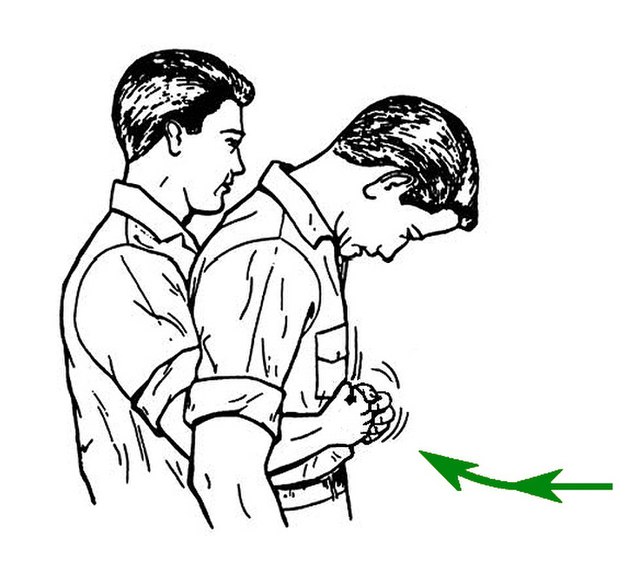
Unconscious patient
Place the patient in supine position, or, if the patient is on the dental chair, place the chair in recumbent position.
- Place the heel of the rescuer's right palm on the abdomen just below the xiphoid process, with the elbow kept locked.
- Then, place the left hand over the right for further delivery of force.
- Both the arms are quickly thrust into the patient’s abdomen, directing force down and superiorly.
- Inspect the oral cavity for any foreign object.
- If the object is visible, remove it using Magill intubation forceps or cotton pliers or fingers (if nothing else is available).
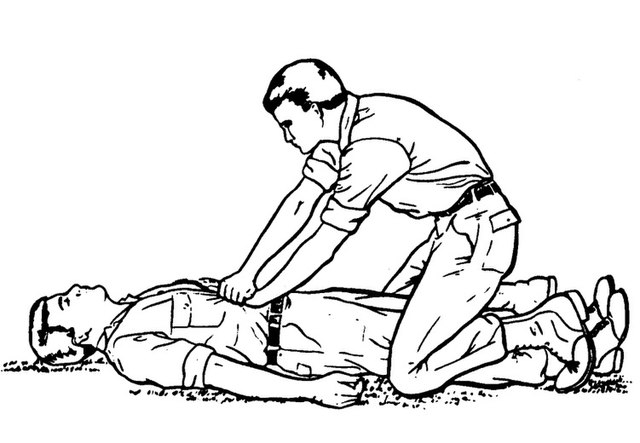
If the patient is unable to breathe:
- Reposition the head to ensure that the airway is open and start CPR at a rate of 30:2 (compressions to ventilations) for five cycles.
- Each time the compressions are stopped to open the airway and deliver two breaths, open the mouth wide and look in for the object.
- If the object is visible, remove it using Magill intubation forceps or cotton pliers or fingers (if nothing else is available).
- This procedure should be performed until ventilation is successful or until trained medical help arrives.
*A blind finger sweep is not recommended as per the current guidelines. If the object is visible it should be removed.
Points to Note
- In 2006, when American Red Cross updated the guidelines on treatment of choking, they renamed the Heimlich maneuver as abdominal thrust.
- Abdominal thrust is exclusively a soft tissue procedure. No bony structures, such as ribs or sternum should be contacted.
- The rescuer should apply pressure with the heel of the hand below the rib cage in all cases.
- The rescuer should not embrace the patient roughly or tightly (bear hug), since this may cause damage to the intra-abdominal organs such as liver and spleen, or to the sternum and ribs.
- Chest thrust should be used in case of pregnant or obese patients.
References
- Medical Emergencies in the Dental Practice (7th Edition), Stanley F. Malamed, Daniel L Orr II, Mosby Elsevier.
- Contemporary Oral and Maxillofacial Surgery, 6 edition, James R. Hupp, Myron R. Tucker, Edward Ellis III, Mosby.
- Medical Emergencies Essentials for the Dental Professional (2nd Edition), Ellen B. Grimes, Pearson Education Inc.
- The images used are available in the public domain (Source: Wikimedia Commons).
*This article is an excerpt from the above mentioned books and Medical Sutras does not make any ownership or affiliation claims.