
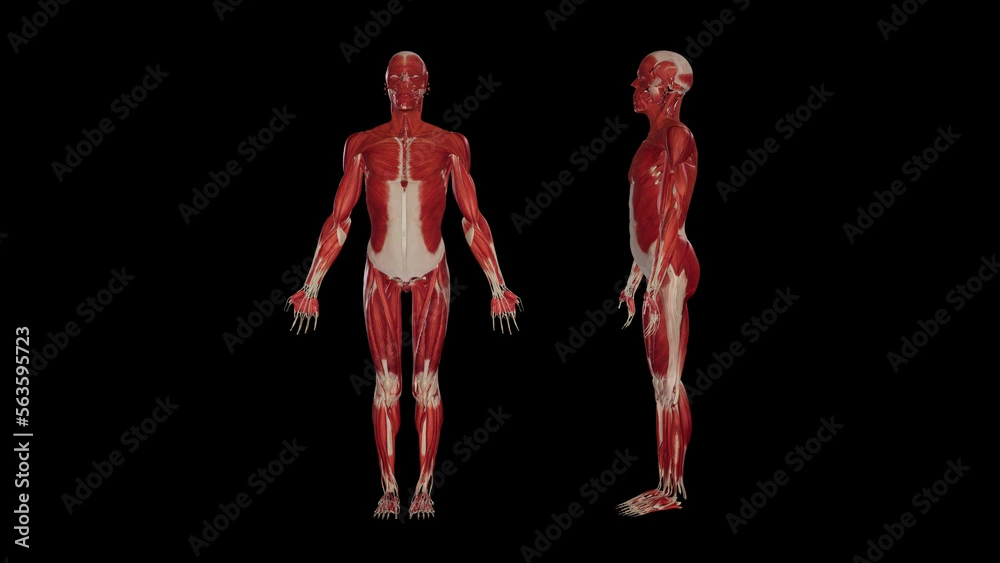
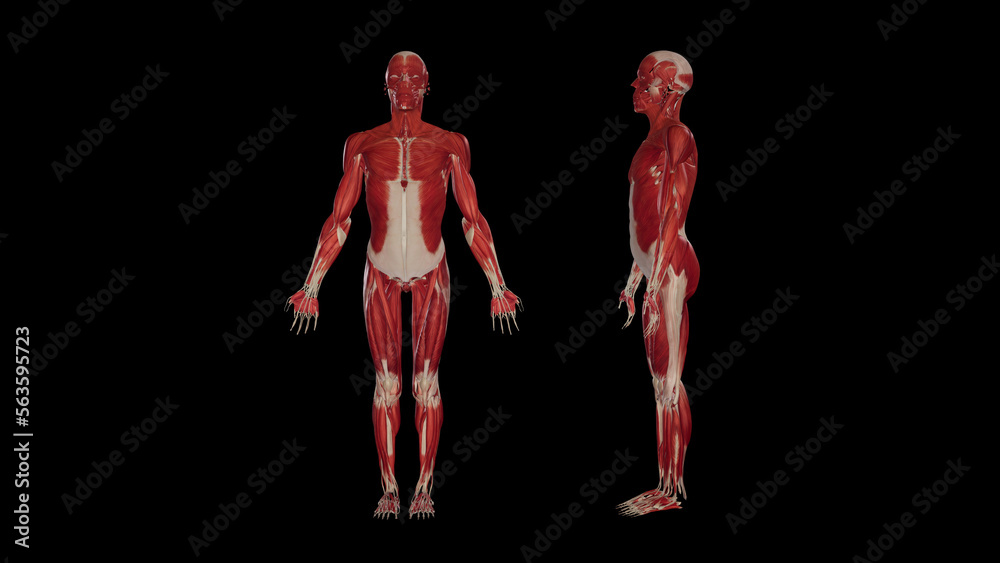
Anatomic position refers to erect standing position, with upper limbs by the sides, and face and palms of the hands directed forward.
Geometric Planes
- Median Plane: Vertical plane passing through the center of the body, dividing it into equal right and left halves. Paramedian refers to planes situated on either side of the median plane and parallel to it.
- Sagittal Plane: Any plane parallel to the median plane that divides the body into unequal right and left parts.
- Coronal/Frontal Plane: Vertical plane situated at right angle to the median plane, that divides the body into anterior (front) and posterior (back) parts.
- Horizontal Plane: Divides the body into upper and lower parts, and lies at right angles to both median and coronal planes.
- Transverse Plane: Any plane that is perpendicular to the long axis of a given structure and divides the structure in a cross-sectional orientation.
Terms to Describe Relative Position
Anterior (Ventral) & Posterior (Dorsal): Indicates front and back of the body.
- Anterior/Ventral refers to any position that is in the front, such as nose is on the anterior side of the head.
- Posterior/Dorsal refers to back of the body, such as, the buttocks are on the posterior side of the body.
- In case of hands, palmar surface denotes the anterior surface or front of hand, while, dorsal surface refers to the posterior or back of the hand.
- In case of foot, plantar surface refers to the sole of the foot, while, dorsal surface represents the upper/top surface of foot.
Medial & Lateral: Describes the position of a structure in relation to the median plane of the body.
- Medial is used when a structure is nearer to the median plane of the body. For example, the nose is medial to the eyes.
- Distal is used when a structure lies farther away from the median plane than another structure. For example, the eyes are distal to the nose.
Superior (Cephalic/Cranial) & Inferior (Caudal): Represents the position relative to the upper and lower ends of the body or a structure.
- Superior (Cephalic/Cranial): Indicates the structure is towards the head, or, upper end of the body such as the head is at the superior end of the body.
- Inferior (Caudal): Indicates the structure is towards the tail, or, lower end of the body.
Proximal & Distal: Describes position relative to the core, root, or attached end of a reference point.
- Proximal is closer to the core, for example, the shoulder is proximal to the elbow.
- Distal is further away from the core, for example, the hand is distal to the elbow.
Superficial & Deep: Denote positions relative to the surface of the body or a given structure.
- Superficial is closer to the surface, such as, skin is superficial to the ribs.
- Deep is away from the surface, such as the heart is deep to the ribs.
Internal & External: Describes the location relative to the center of a structure or space.
- Internal is inside the structure. e.g., the brain is internal to the skull.
- External refers to outside of a structure. e.g., the skin is external to the skull.
Ipsilateral & Contralateral: Refers ot positions relative to a reference side of the body.
- Ipsilateral is when a structure is on the same side as the reference point, such as, the right hand is ipsilateral to the right leg.
- Contralateral is when a structure is on the opposite side as the reference point, such as, the right hand is contralateral to the left leg.
Supine & Prone: Refers to the position of the body while lying down.
- Supine position refers to lying on the back
- Prone position is laying face downward.
Afferent & Efferent: Refers to the direction of flow relative to the reference point.
- Afferent is flow toward the reference point, e.g., venous blood flow is afferent to the heart.
- Efferent refers to flow that is away from the reference point, e.g., arterial blood flow is afferent to the heart.
References
- Snell's Clinical Anatomy By Regions, Lawrence E. Wineski, Wolters Kluwer.
- Image Source: Adobe Stock (https://as2.ftcdn.net/v2/jpg/05/63/59/57/1000_F_563595723_V6RKAdSiruJCPEDfWazHC0GxUnaOLG0u.jpg).
*This article is an excerpt from the above mentioned sources and Medical Sutras does not make any ownership or affiliation claims.